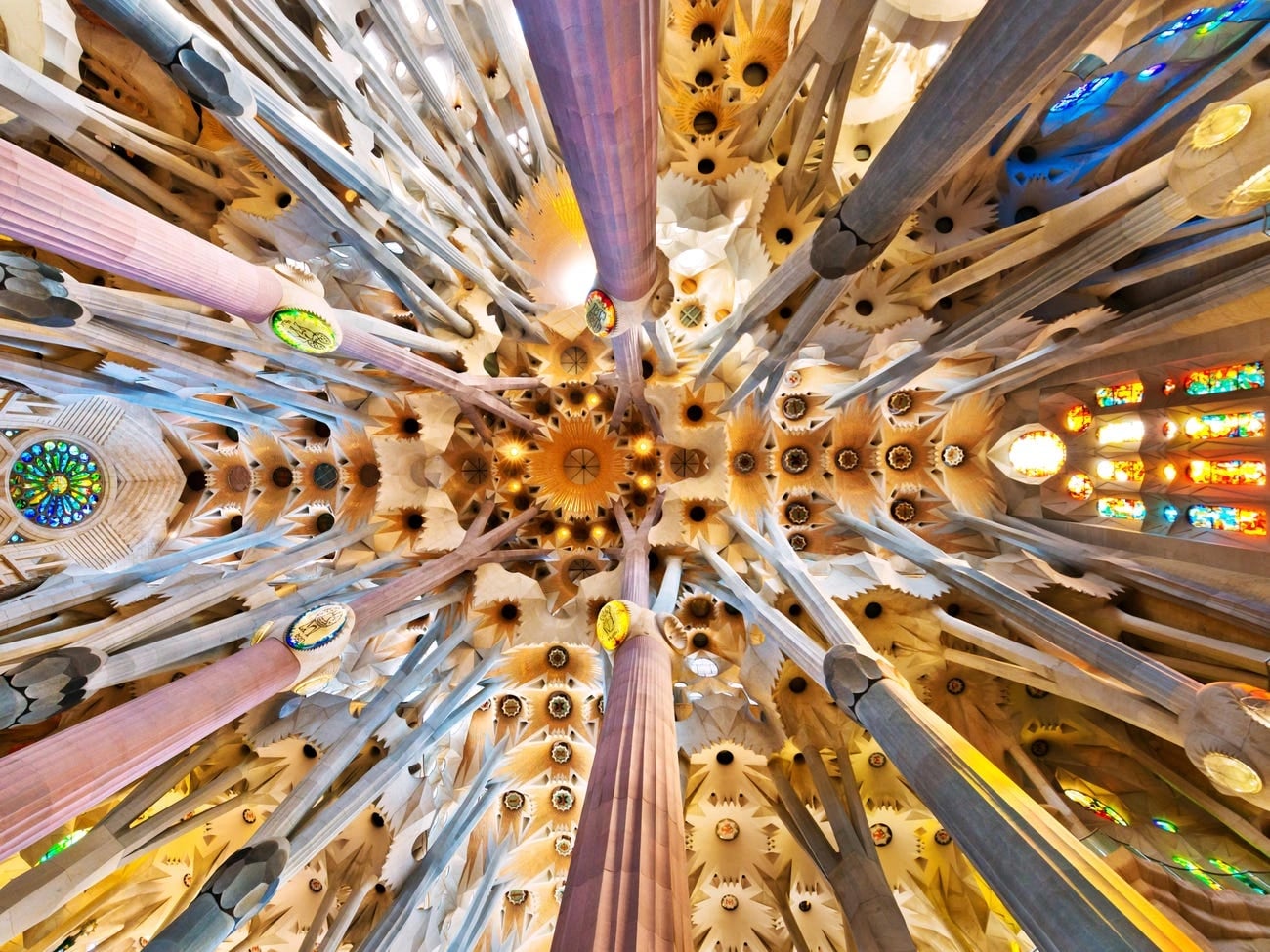
Barcelona: Inside the City of Wonder


As Barcelona celebrates the completion of the Torre de Cristo and enjoys its year as the World Capital of Architecture, we explore an ever-evolving creative hub with art at its heart
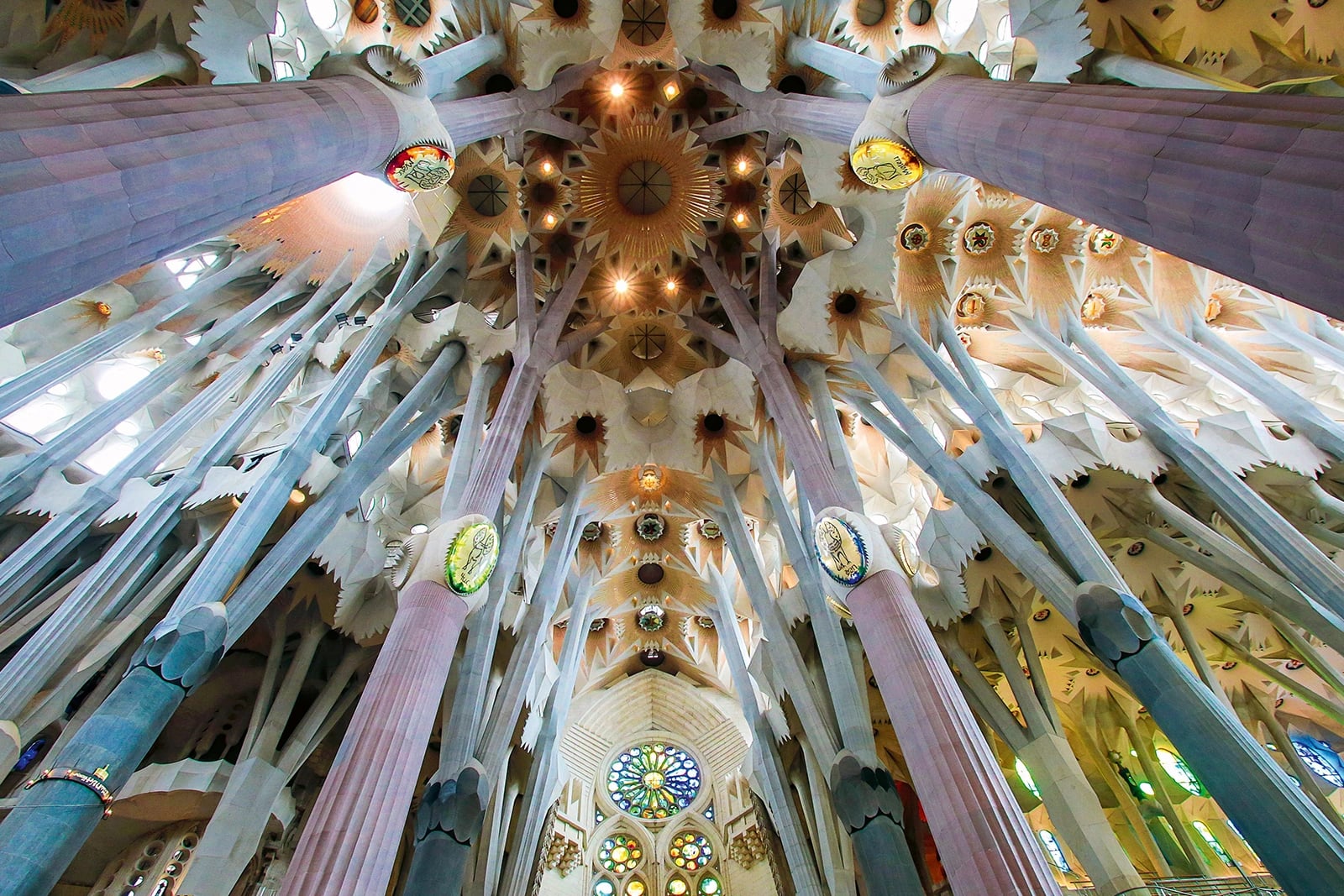
Searing across a June night’s sky, a rousing spectacle of light, music, and fire recently brought Barcelona to a standstill. This was a milestone moment; a celebration of the Sagrada Familia’s slow-rising and finally complete Torre de Cristo. But there was a much grander story playing out at the iconic church, too. Swirling amid all the cultural symbolism, high-tech wizardry, and citywide pride, this was a proclamation—the spark of something new.
Gaudí’s spiritual skyscraper, which stands at an impressive 577 feet (176 m), is remarkable as the city’s oldest, newest, and now tallest tower. It is emblematic of the Catalonian capital’s lofty ambitions—this is a city that is no stranger to architectural visionaries eager to make their mark through captivating edifice, which may partially explain its perennial state of being under construction. As Barcelona embarks on yet another chapter of map-altering urban regeneration, its scale reminiscent of the preparations for the 1992 Olympics, the city is reminding everyone about its penchant for pushing the limits of imagination.
Barcelona’s organizing principle has long blended future-focused thinking with epic feats of emotional projection. As an opening act for the city’s UNESCO-UIA designation as the 2026 World Capital of Architecture, the Sagrada Familia celebration showed the area at its finest. Emanating from the synchronized lightshow and the orchestra’s heavenly melodies, the city seemed eager to talk about tomorrow. As a final heartstring-plucking showstopper, the crowd, which included Spain’s prime minister, regional politicians, cultural figures, and Pope Leo XIV, were treated to a celestial apparition of Antoni Gaudí—care of a drone swarm—who nodded in approval over the structure that he started in 1882. The night will long be remembered as the one in which Barcelona stood taller as the rest of Spain watched on with awe (and perhaps a hint of envy). A raft of events, activities, and exhibitions is now stretching across the rest of the year; an opportunity to show how far the city has come while also unveiling where it is heading.
Gaudí is always a good place to start. Personifying Barcelona’s spirit of boundlessness and readiness to redefine the possible, the visionary architect danced between deeply religious faith and subversive thinking. Catalonia’s Gaudí worship came late. Misunderstood and underappreciated while alive, his work is now integral to regional identity. Perhaps seeking atonement for his death (hit by a tram and mistaken for a homeless man, he died alone in 1926), a push to canonize the man dubbed “God’s architect” started in 1992. Much of his work needs little introduction. Beyond the basilica, there is Casa Milá, known locally as La Pedrera, then Casa Batlló with its fantastical façade, and the immersive grounds of Park Güell.
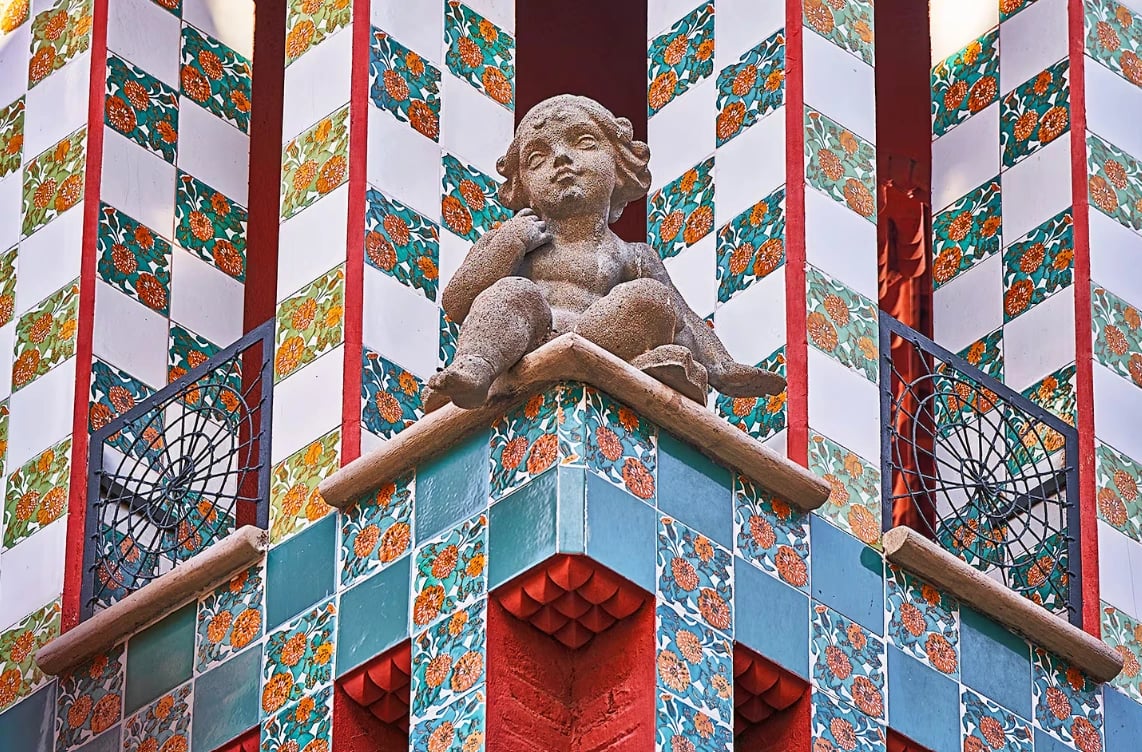
Lesser known is Gaudí’s first privately commissioned house, Casa Vicens, which was transformed into a small museum in 2017. Envisaged as a country house for a wealthy stockbroker back in 1883, one of Gaudí’s disciples doubled its size in 1925 on his own.
Neither could have imagined how this property would become such a catalyst for change in Catalonia’s vernacular. Permeated with natural motifs, floral forms adorn the ceilings, fruit is carved into the smoking room’s Moorish-inspired concaves, and the painted forms of majestic fauna, including several flamingos, grace the walls. Each room provides an insight into the ideas of a designer who pushed Barcelona’s visual identity into the realm of fantasy.
In the well-heeled district of Sarrià-Sant Gervasi, an even lesser-known private home by Gaudí opens for private tours. Constructed between 1900 and 1909, Torre Bellesguard proffers insights into the architect’s playful approach to building medieval-styled manors.
Despite Gaudí’s posthumous celebrity status, many Barcelonins are happy to guide visitors beyond the architect. A short walk from the Sagrada Familia, the Recinte Modernista Sant Pau is a testament to the healing potential of the built environment. Lluís Domènech i Montaner designed the precinct as a hospital that is rich in color, with flourishes of fantasy and forms that harness natural elements. Today it is a cultural hub, school, and center for investigation.
On the other side of town, perched on the Montjuïc mountain, Josep Lluís Sert’s Modernist masterpiece is home to the Fundació Joan Miró museum. The artist established this outpost as the Centre d’Estudis d’Art Contemporani (CEAC) to champion new talents. Home to Miró’s extensive archive and many of his Surrealist works, the space also spotlights experimental and emerging artists. But the building is worth the visit alone, subverting the idea of an enclosed museum by opening the structure to beams of sunlight and spectacular views of the city’s skyline.
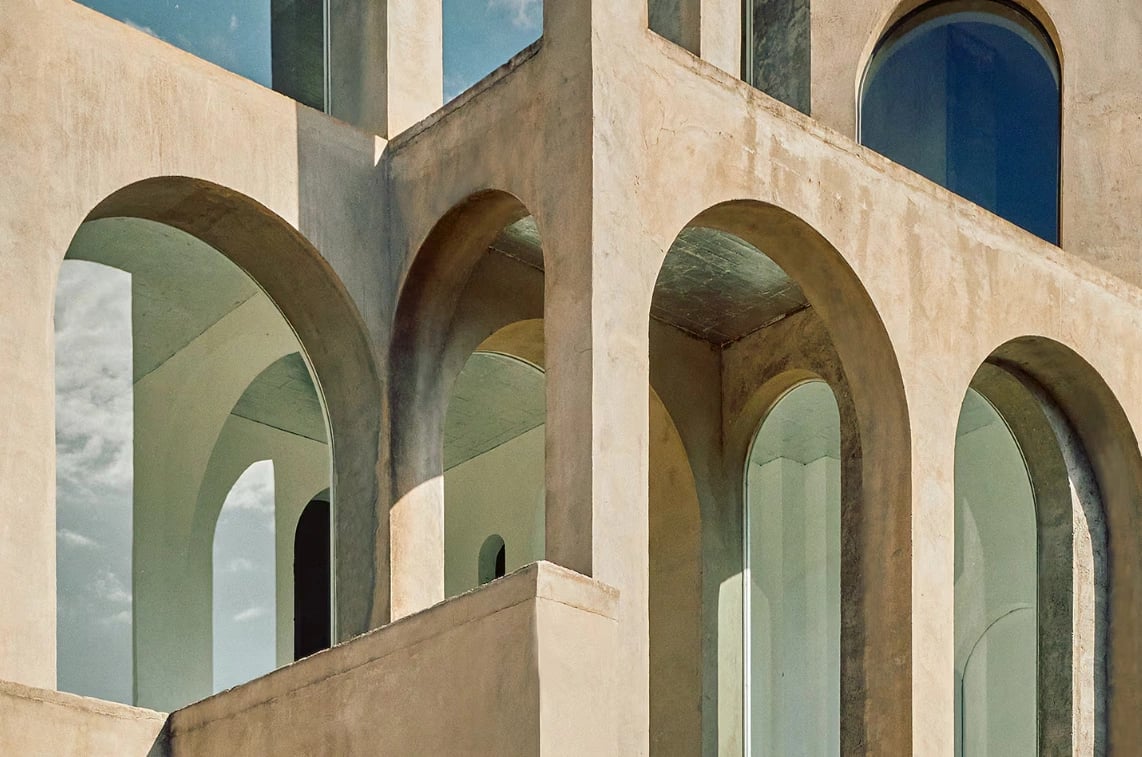
Then there’s another of Barcelona’s celebrated eccentrics, late sculptor Xavier Corberó, whose seemingly infinite construct of chambers and arches began in 1968, bequeathing a legacy of labyrinthine wonder. Recently acquired by architecture collective Mesura, his former residence and studio is set to reopen this year as Espai Corberó, with a program focused on the cultivation of creativity.
In recent years the city has been reimagining public spaces, too. Entire blocks have been pedestrianized as part of the wider Superilles project, bringing a combined sense of calm and vibrancy back to neighborhood sidewalks.
The most prominent paragon of the city’s increasingly greener pastures is Plaça de les Glòries. Once dominated by heavy traffic, it now has a complex subterranean tunnel system that has made space on the surface for a large park and more than 1,000 trees. On its edges you’ll find the mirage-like pergola of the Els Encants market and Disseny Hub design museum, currently exhibiting Seny i Rauxa, an evocative showcase of Catalan architecture that charts the city’s creative evolution from 1875 until the present day.
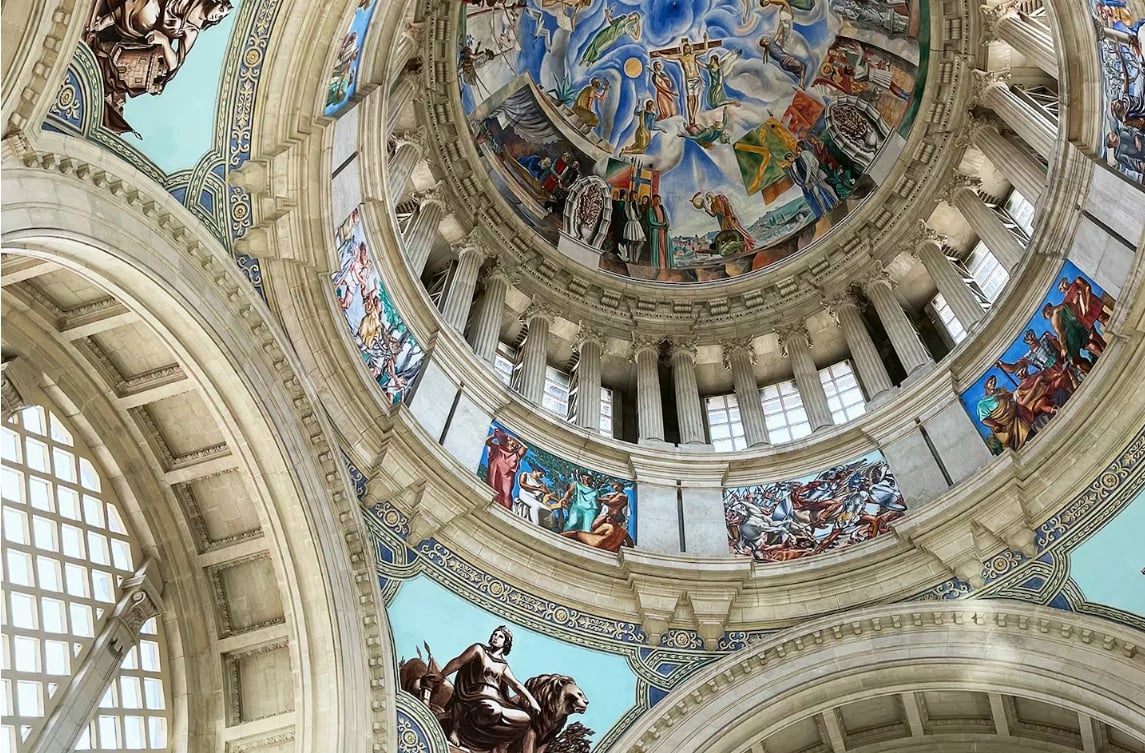
But the conversation around the city’s future is captivating the collective dream. As the setting for the World Capital of Architecture conference, a derelict thermal power plant called Las Tres Xemeneies de Sant Adrià de Besòs will roar back to life before the entire seaside structure is redeveloped into the Catalunya Media City tech hub. Another audacious refurbishment will see the Museu Nacional d’Art de Catalunya (MNAC) expand, bringing its main entrance down to the base of the Montjuïc. An exhibition of the European Union Prize for Contemporary Architecture, curated with the Mies Van der Rohe foundation, provides a sneak peek into what this will look like, inviting people through an abstract door opposite the Modernist pavilion to marvel at 410 nominated works—before the ambitious renovation begins later this year.
It’s all part of a wider transformation of the hillside that is timed to culminate for the centenary of the city’s 1929 Barcelona International Exposition. Even Barcelona’s most recognized promenade, the famous La Rambla, is getting a facelift, with the lower stretch already complete. It’s paved the way for projects such as El Teatre Principal, a once-abandoned theater that will become a center for musical theater, live performances, and exhibitions.
Walking through Barcelona today, there is a visceral sense of becoming. Gaudí’s unbridled imagination clearly left a mark. But he didn’t transform the city singlehandedly. A succession of other designers have continued to encourage reflection about identity, self-image, and the city’s eternal thrust towards a better future. In true Barcelona style, this formula extends far beyond its beautifully illustrated façades, and colors ongoing, collective conversations. In a year when many of these lively debates will take center stage—during 1,500 activities spread across its 10 districts—it’s no wonder the entire city feels like a living monument to unabashed adventurism.
Source: Christie's International Real Estate
Read more from category Architecture
Dubai Tourism Continues to Grow - Nearly 7 Million International Visitors in Eight Months
 17/09/2026
 Architecture
 Unique Estates Dubai
Tour Shakespeare Ranch, a Legacy Estate on Lake Tahoe
30/08/2026ArchitectureUnique Estates
4 Homes on Display at the Pebble Beach Concours d’Elegance
14/08/2026ArchitectureUnique Estates
Earthly Delights: 5 Homes in Harmony with Nature
23/04/2026ArchitectureUnique EstatesThere are several important factors to consider when buying a property to ensure you make the right decision. These are the location and size of the property, the budget you have, and the type and condition of the property.
 Call us