03/05/2026
Lifestyle

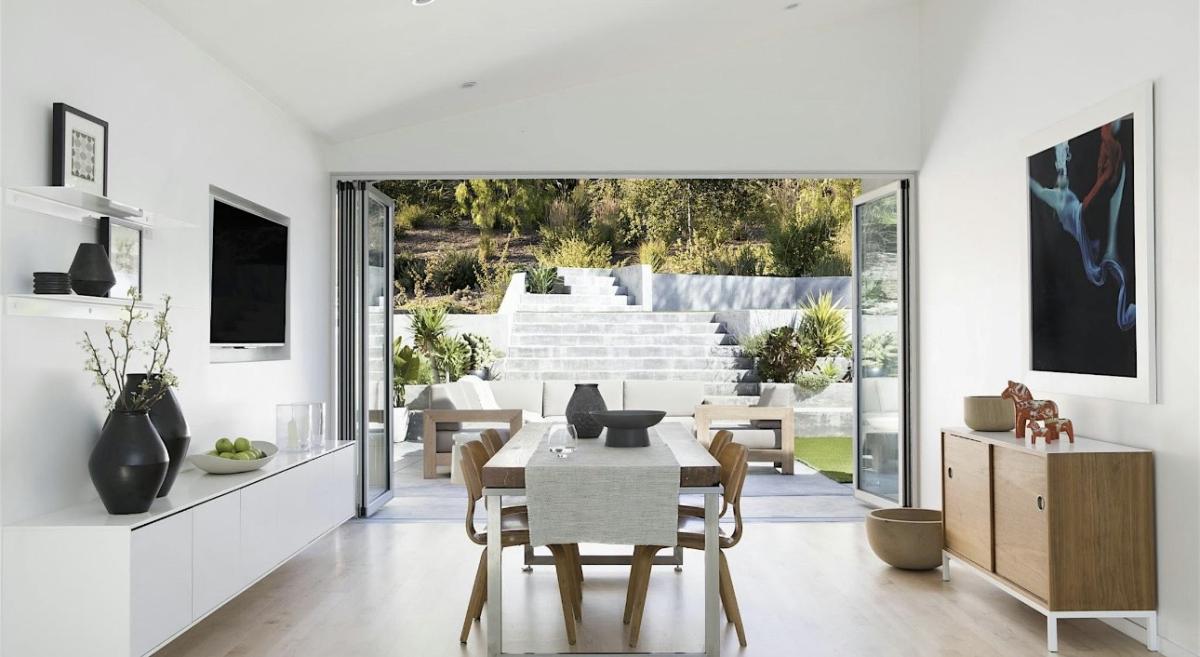
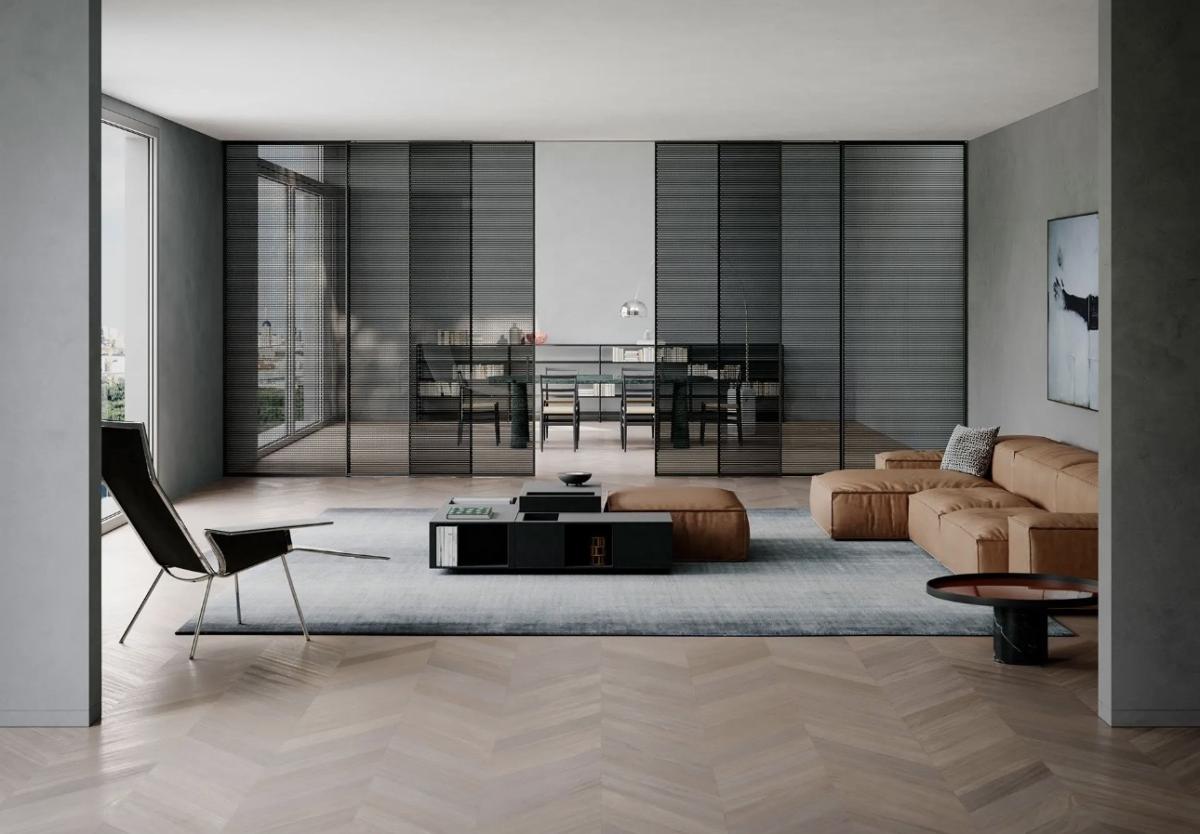
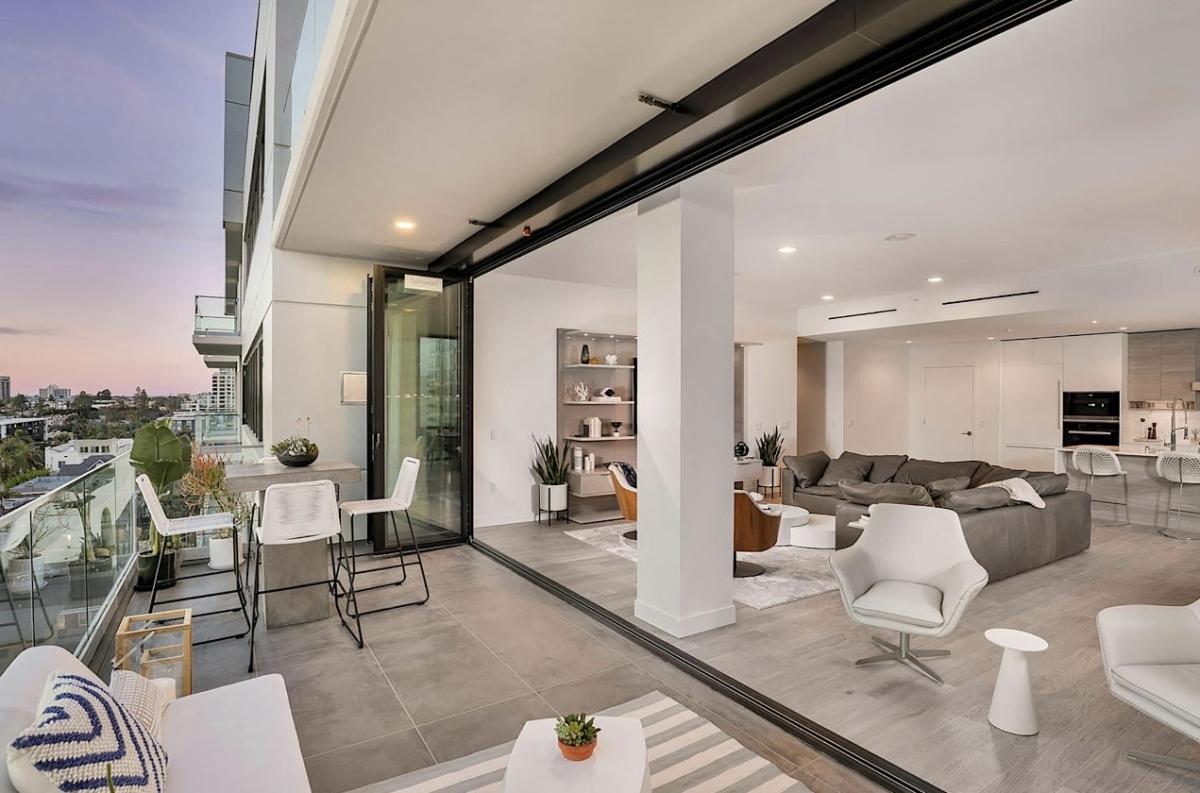
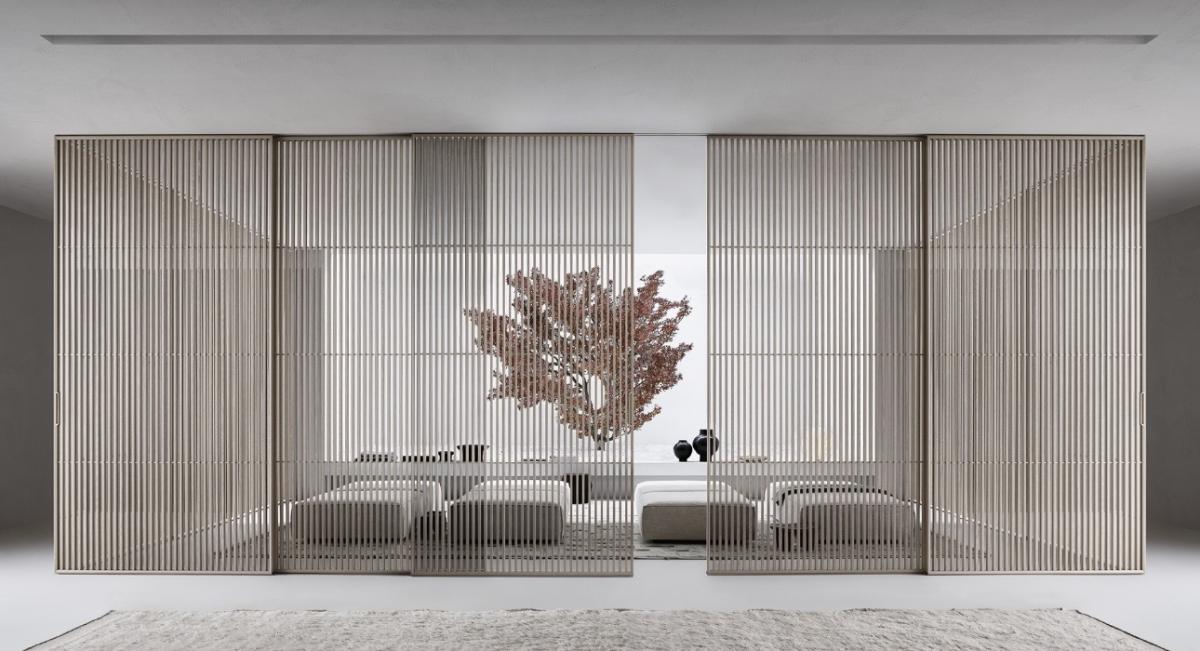
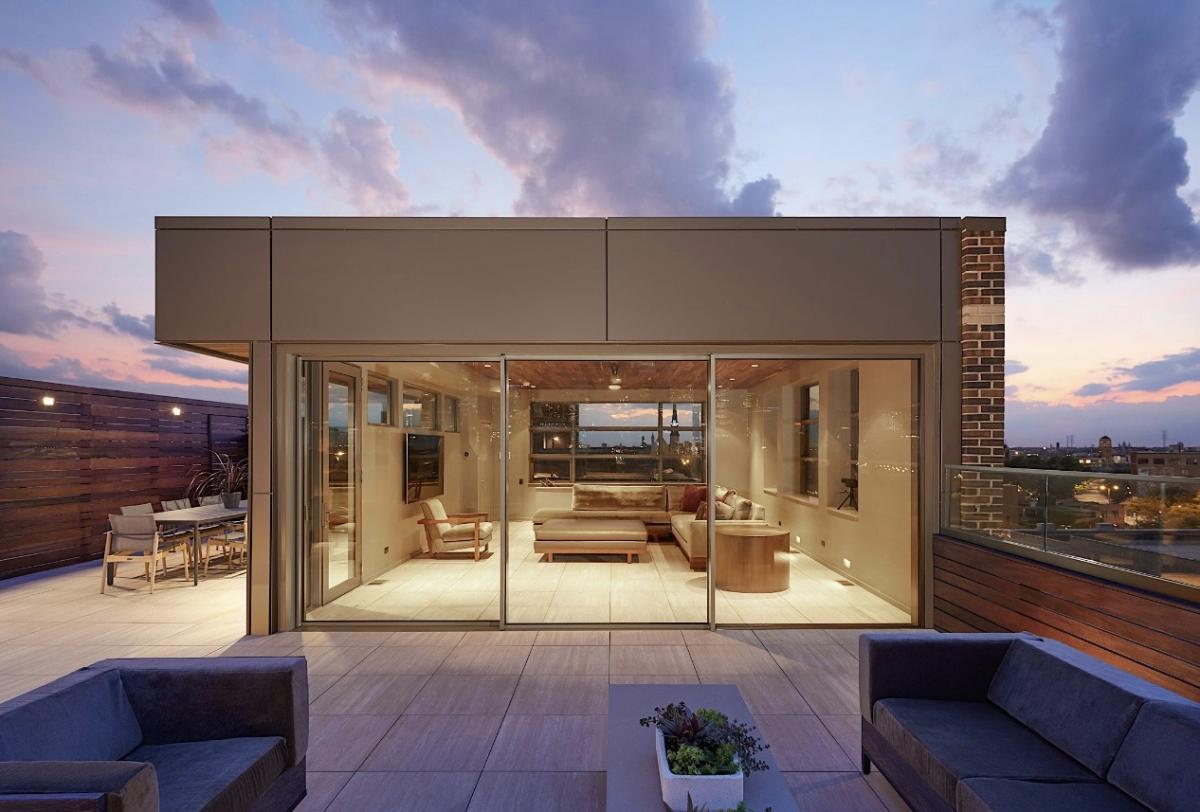
In contemporary high-end residential architecture, space is no longer conceived as a sequence of fixed rooms, but as a unified volume with the inherent potential for transformation. The projects shaping the international discourse—featured on platforms such as ArchDaily and Dezeen—clearly articulate this shift. The home is increasingly understood as a dynamic environment, capable of accommodating multiple living scenarios within the span of a single day.
This philosophy is further reinforced by leading international manufacturers of architectural systems such as Sky-Frame, Rimadesio, Lualdi, Solarlux, and LaCantina. These companies collaborate with architects from the earliest conceptual stages, ensuring that movable elements are integrated into the spatial composition itself—rather than treated as secondary technical additions.
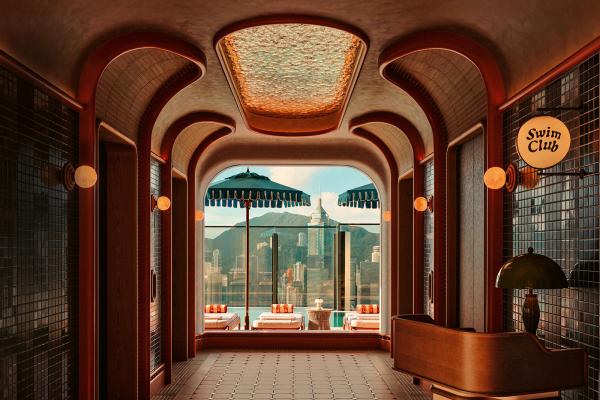
A grand apartment or penthouse defined by a panoramic façade and an impressive spatial volume can accommodate a master suite, spa area, fitness zone, formal living room, and dining space within a single architectural envelope. Yet the essence of true luxury lies not merely in scale or view. It resides in the freedom to reconfigure that volume effortlessly.
The kitchen may be discreetly concealed during a formal dinner. The bedroom may remain an intimate retreat while the living area hosts guests. Alternatively, the entire space may unfold into a monolithic, light-filled interior—seamless and uninterrupted.
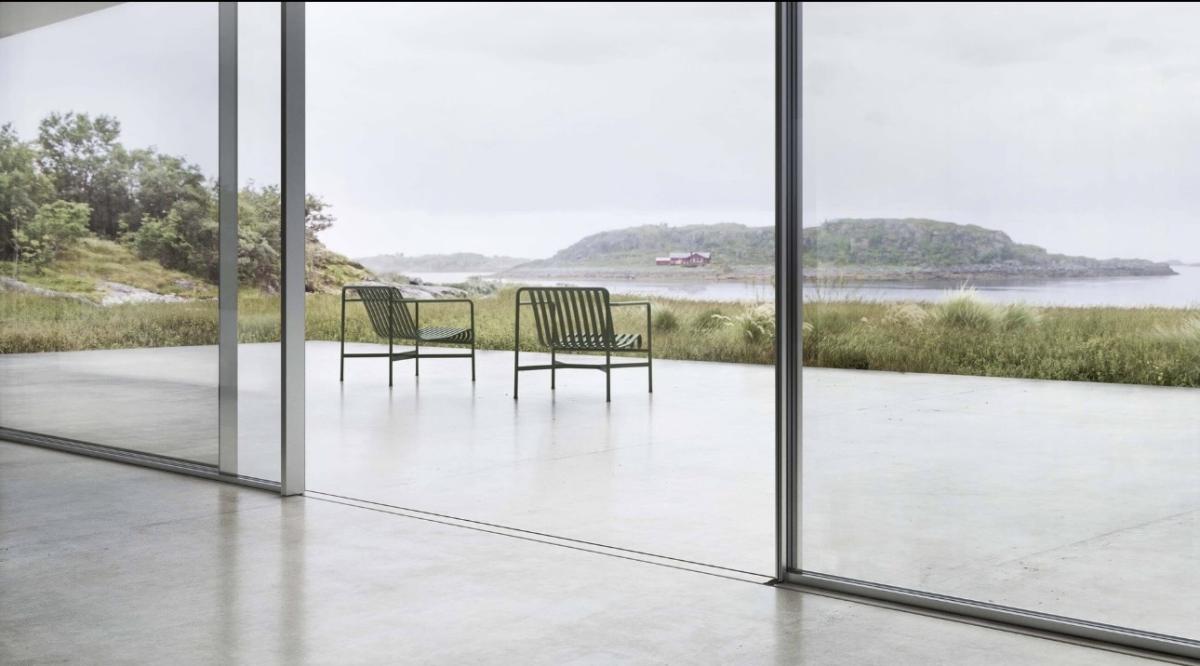
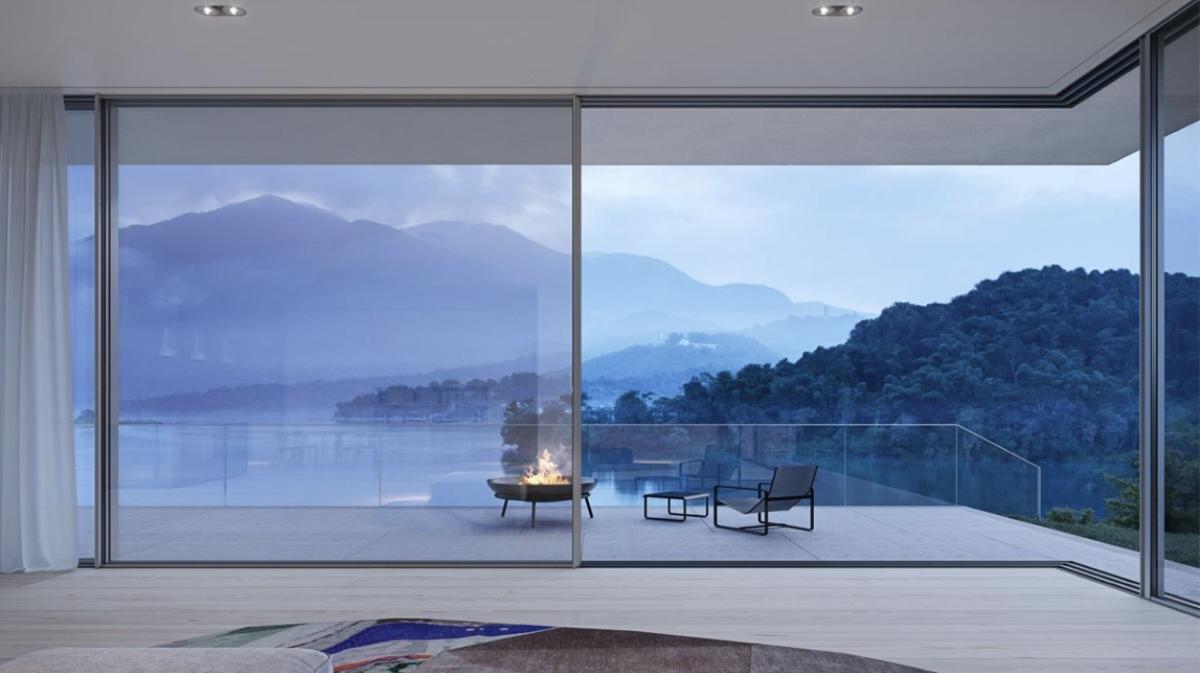
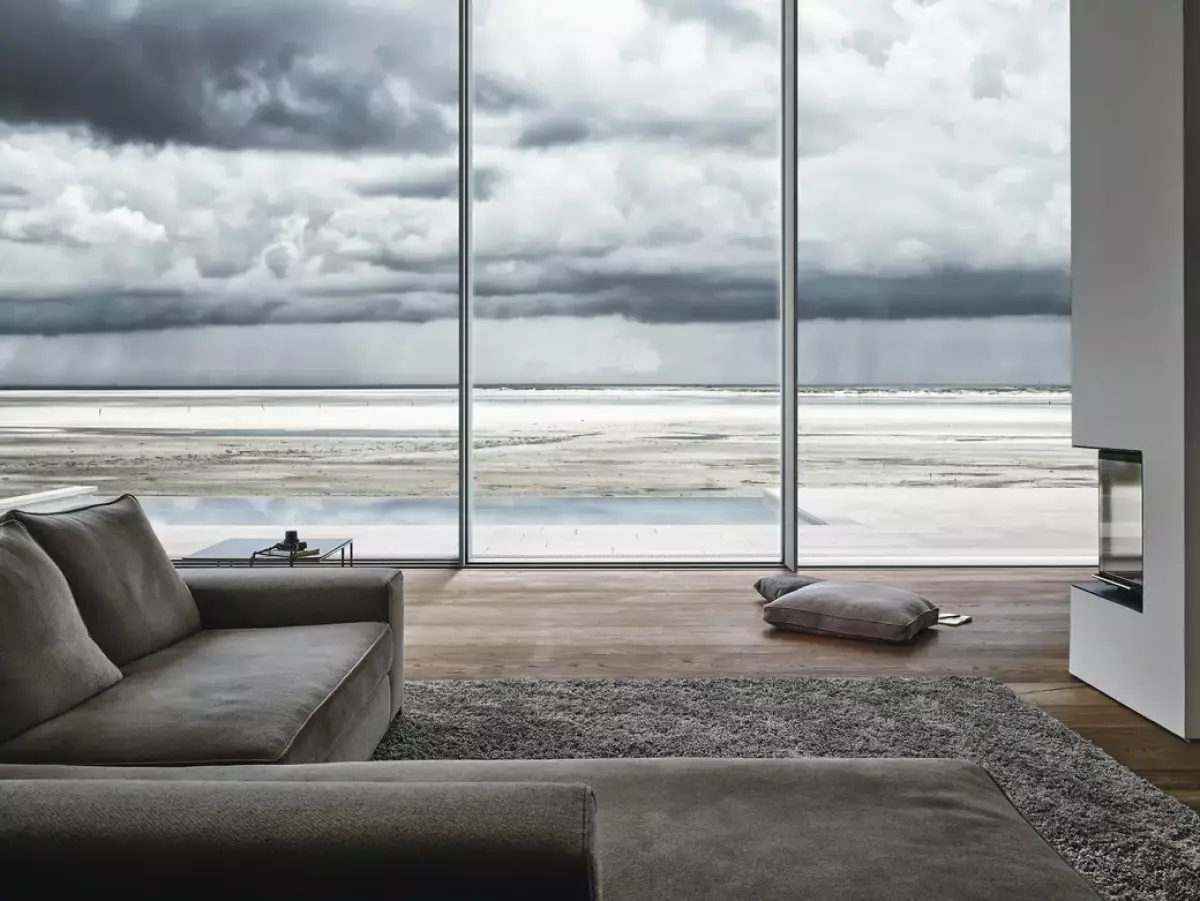
In the latest high-end realizations, this fluidity is achieved through combinations of glass façade systems with minimal profiles—often featuring visible frames as slim as 18–25 mm—structural glazing, and concealed ceiling-bearing tracks that allow openings exceeding 6–8 meters without intermediate vertical divisions.
This flexibility is not merely a matter of interior design, but of precise architectural and engineering strategy. In the premium segment, functional management is increasingly realized through high-performance movable systems—constructions that enable adaptive separation and unification of zones without compromising natural light, continuous flooring, or visual clarity.
The partition is no longer a wall in the traditional sense. It is an intelligent architectural instrument—one that merges engineering precision with expressive design character.
These systems are frequently developed through BIM modeling, allowing structural load calculations, HVAC integration, electrical coordination, and full automation planning to be resolved prior to construction.
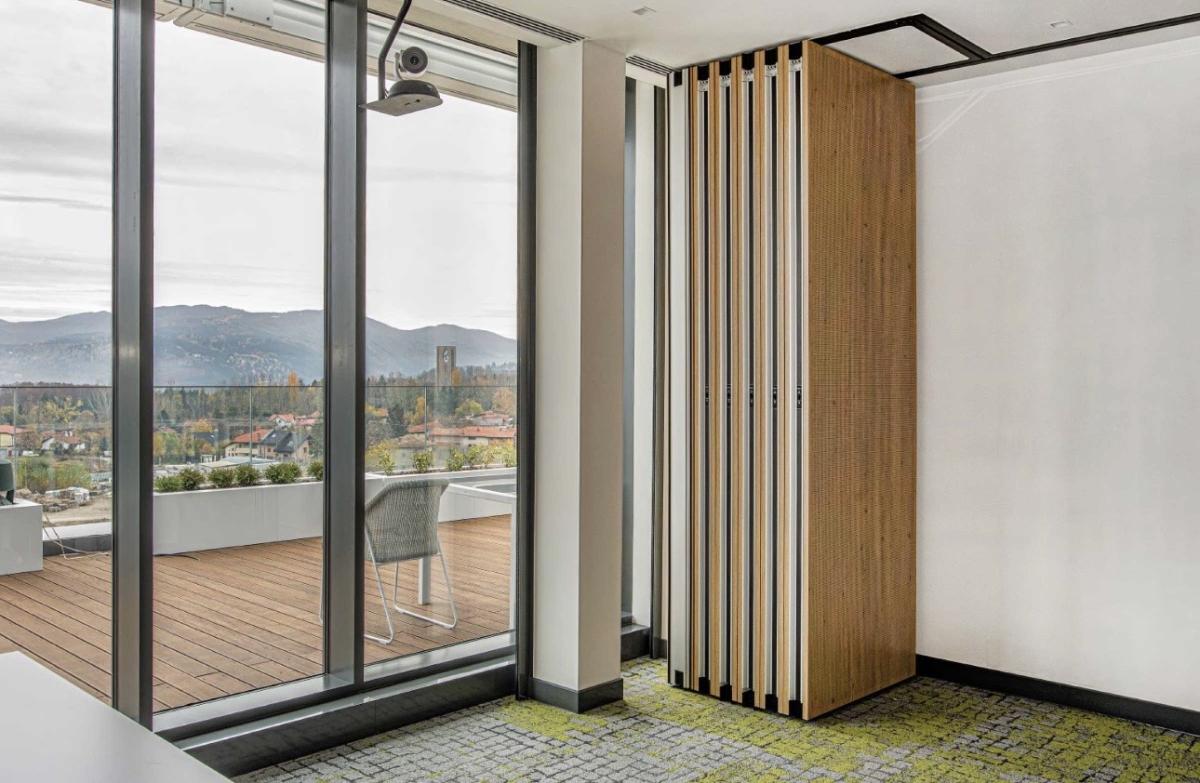
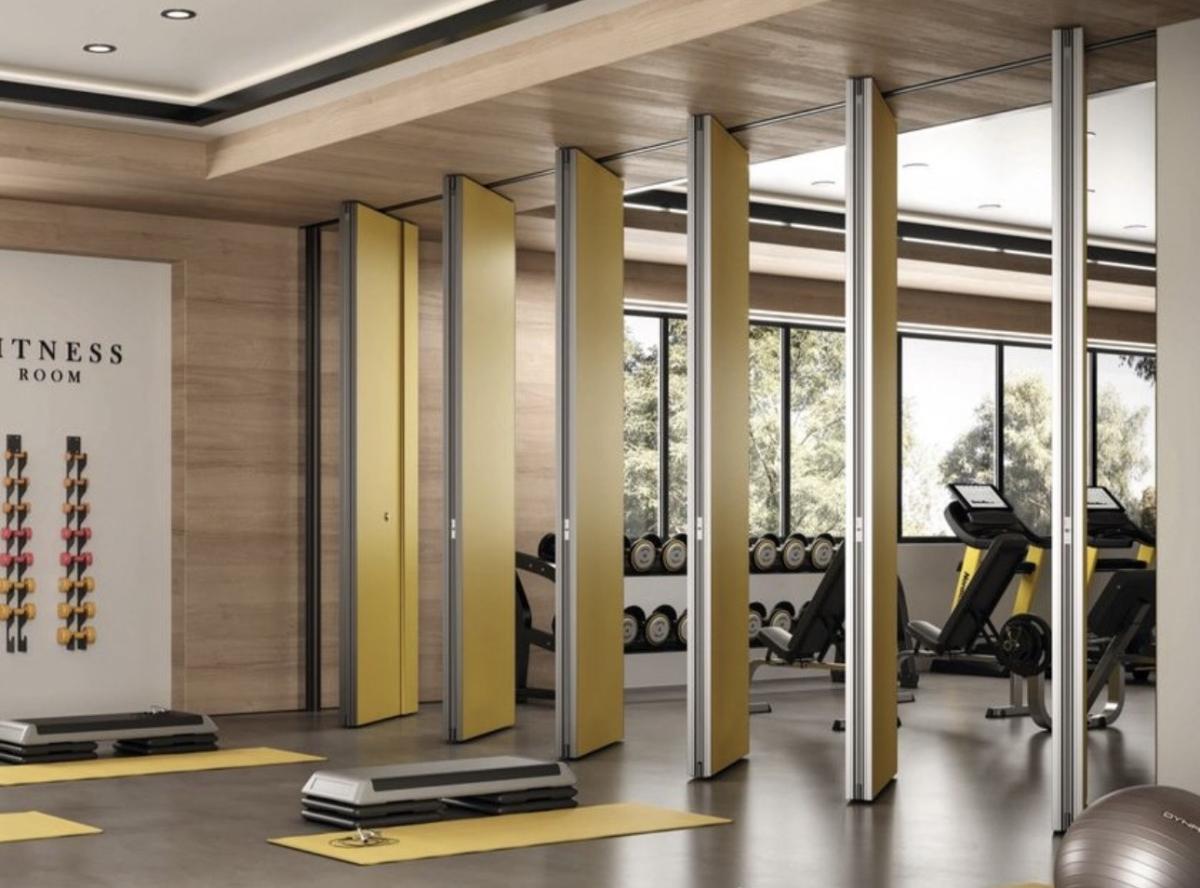
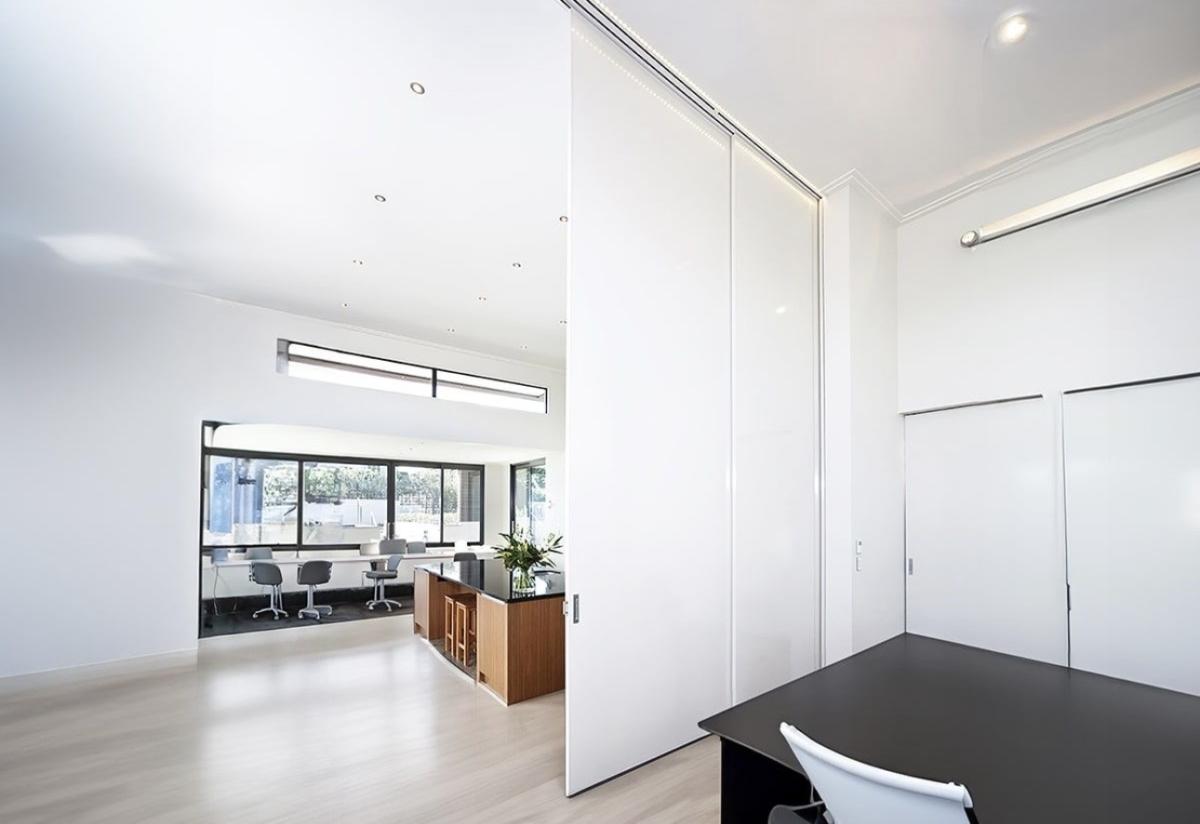
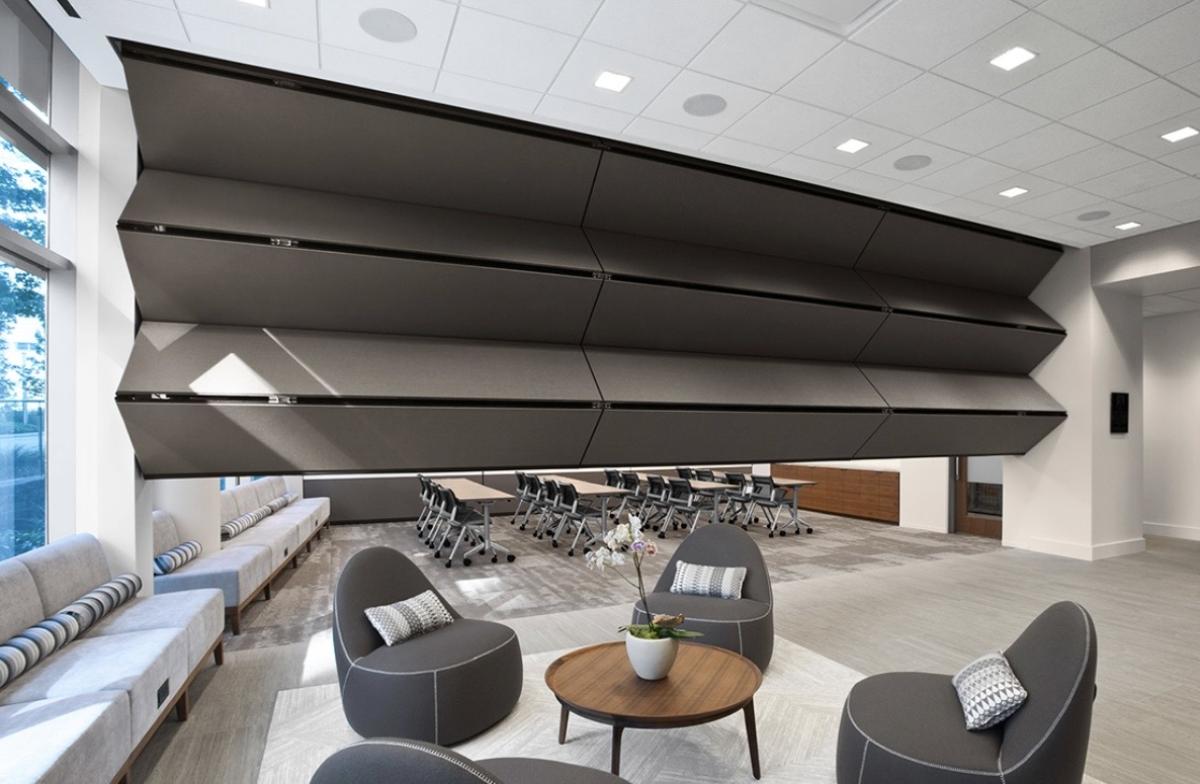
One of the most technically demanding categories within this segment is the operable movable wall. Manufacturers such as Modernfold and Hufcor develop systems achieving acoustic insulation levels of up to 50–55 dB—performance comparable to solid traditional walls.
European companies including Dorma Hüppe and Moderco offer certified systems with laboratory-tested acoustic ratings, EI30–EI60 fire resistance, and panel heights exceeding 4 meters—ideal for residences with double-height spaces.
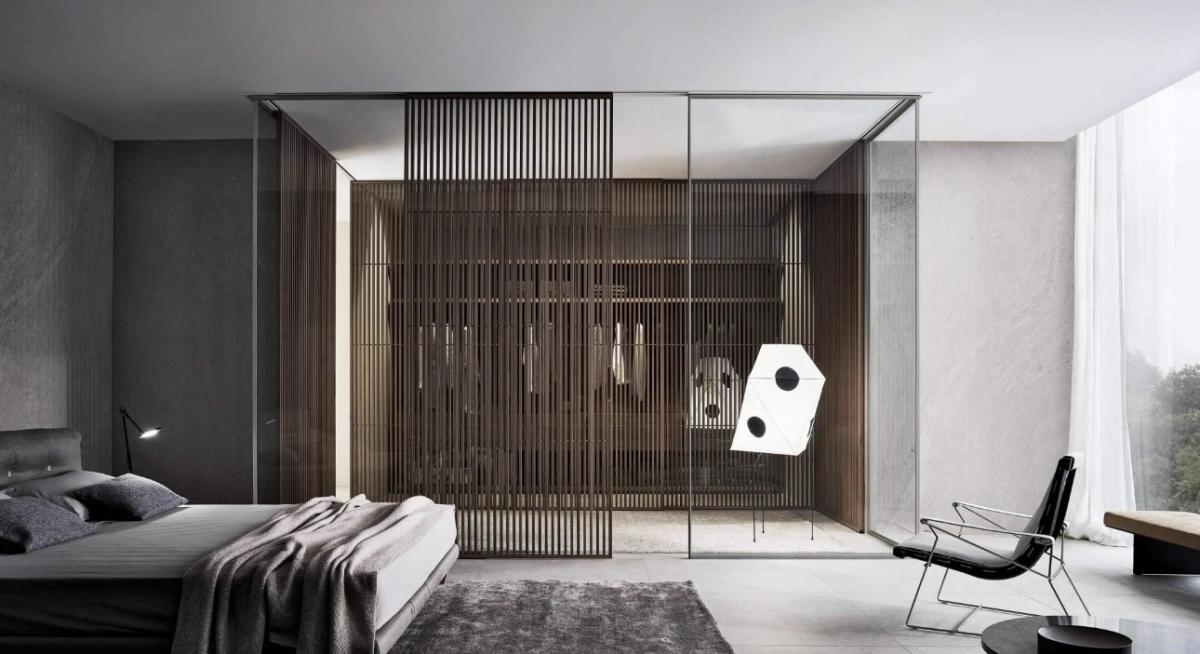
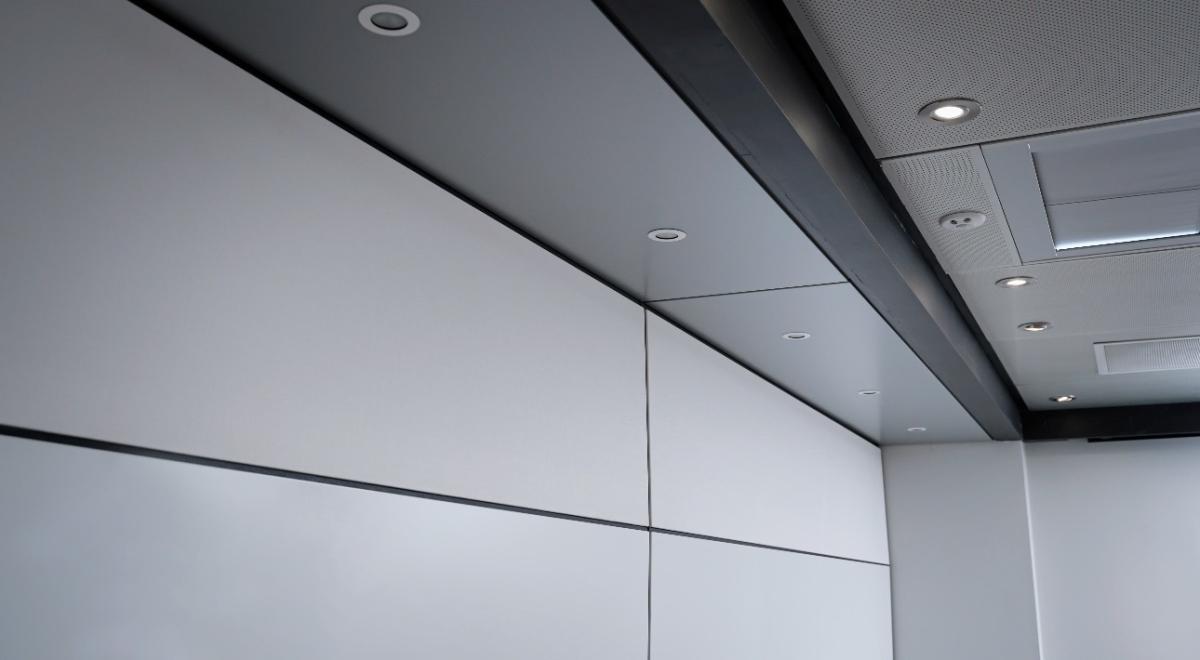
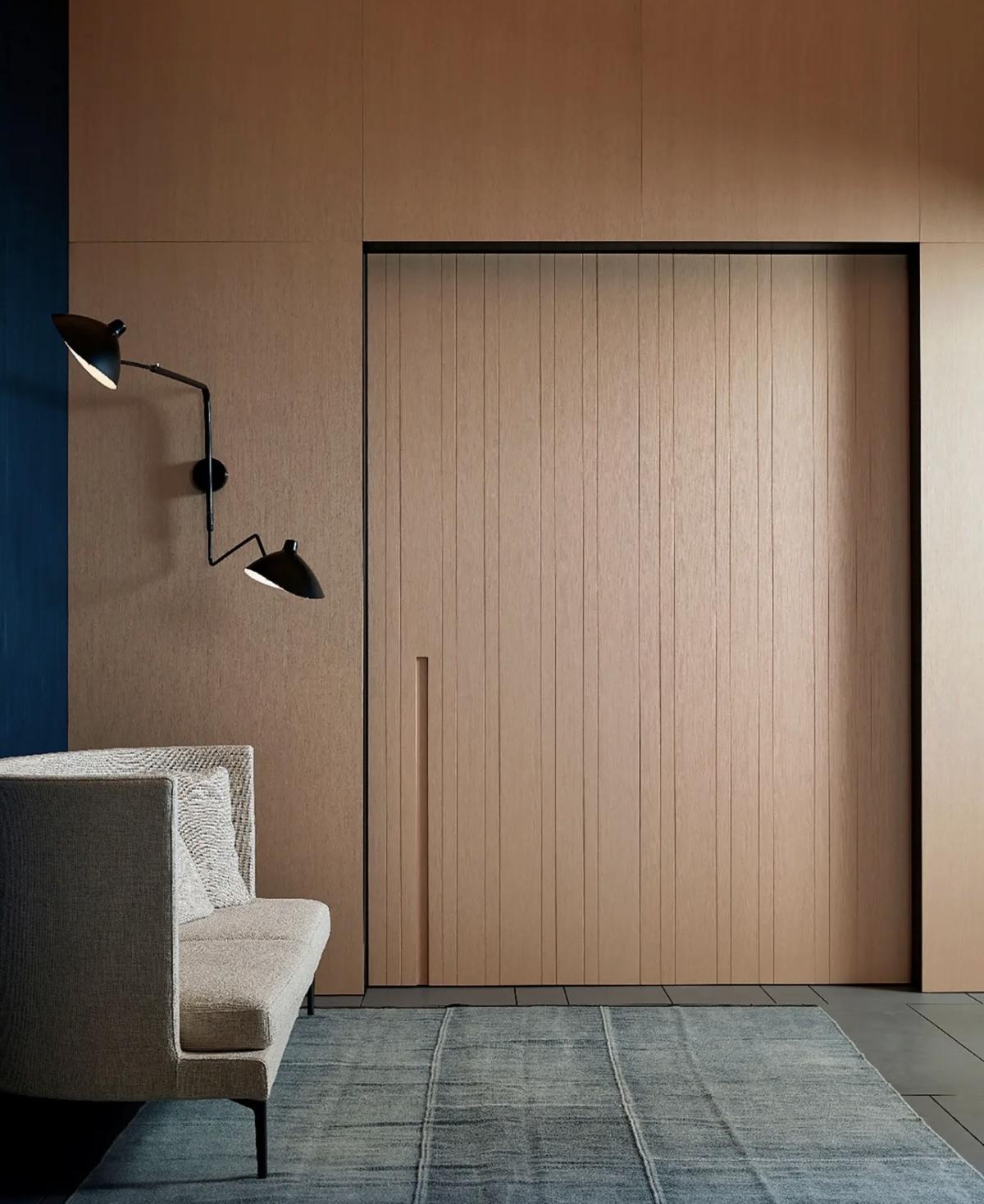
Construction typically consists of multilayer panels with sound-absorbing cores, aluminum or steel frames, and customizable finishes—natural veneer, textile, lacquer, or metal. Panels glide along overhead tracks integrated into suspended ceilings, ensuring a completely flush floor without thresholds or visible bottom guides. When closed, automatic drop seals activate at the base, compressing against the flooring to ensure acoustic integrity.
High-end mechanisms employ powder-coated extruded aluminum profiles, structural steel support beams, Teflon-coated roller carriages, and bearings rated for over 100,000 operational cycles.
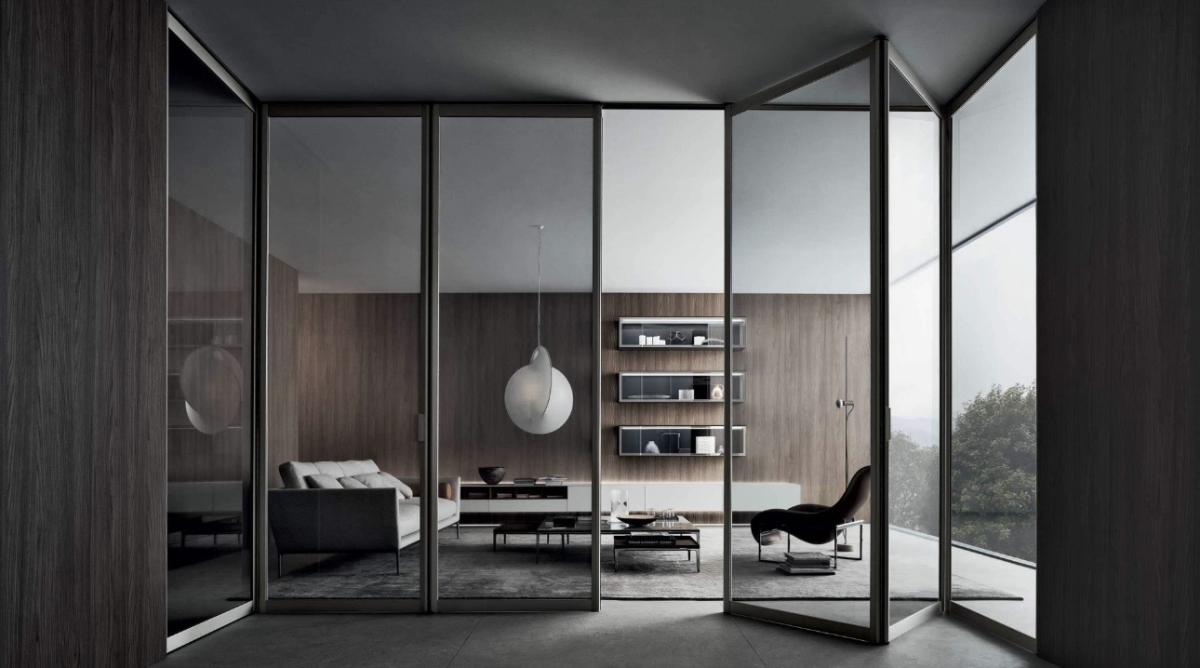
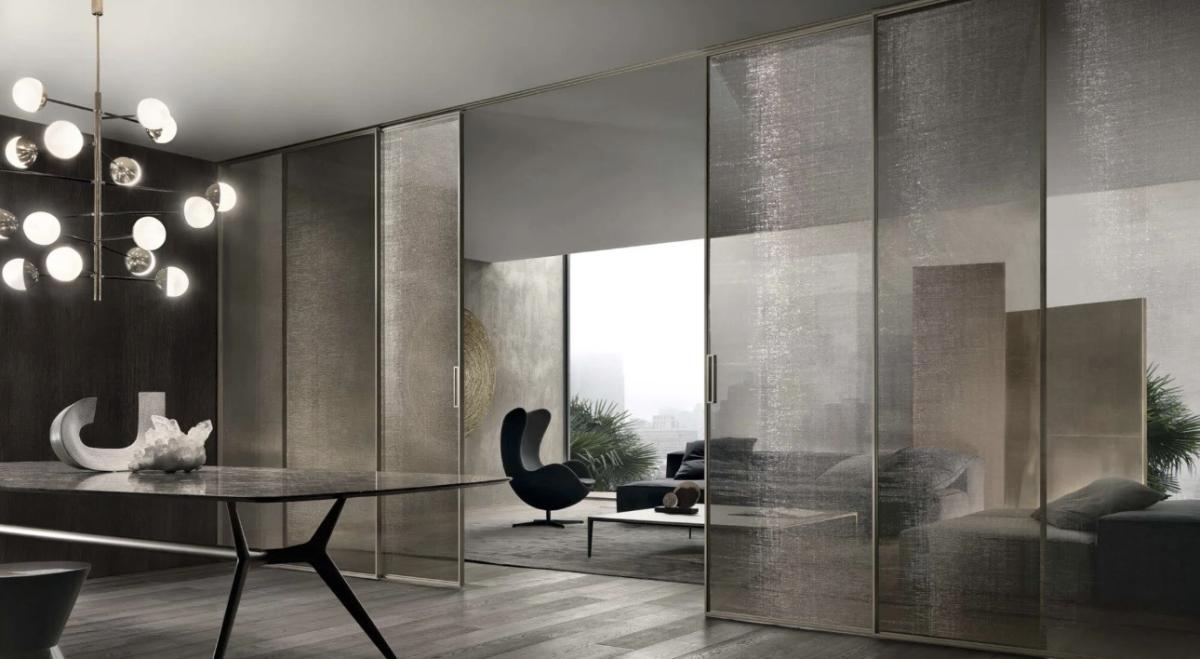
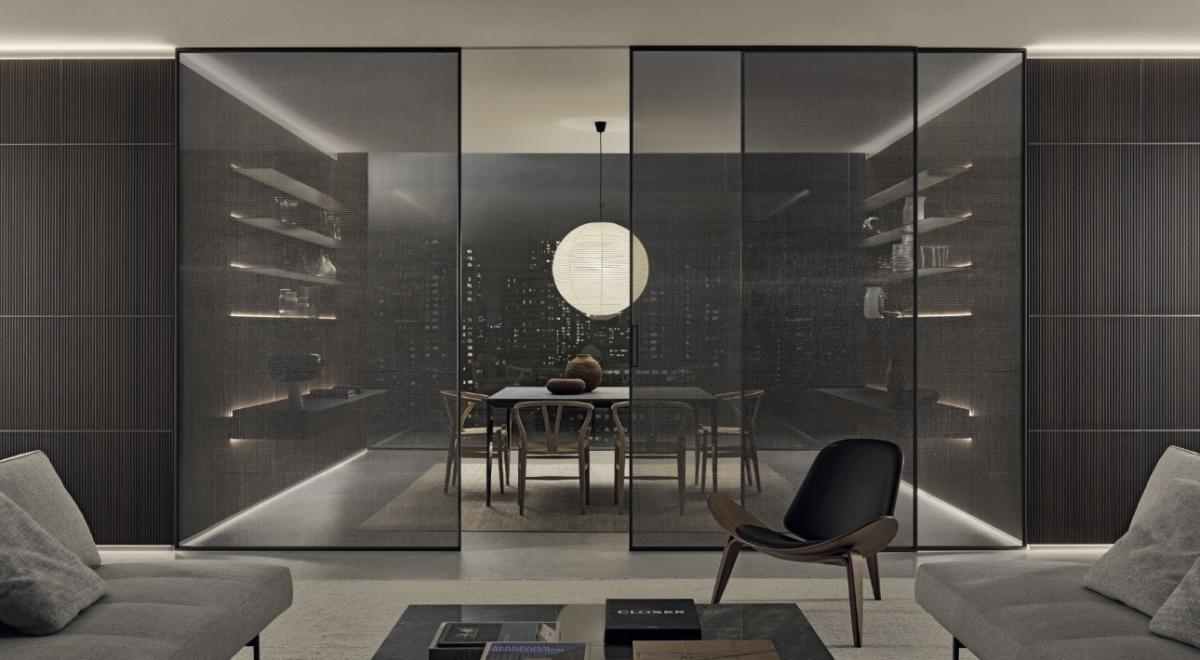
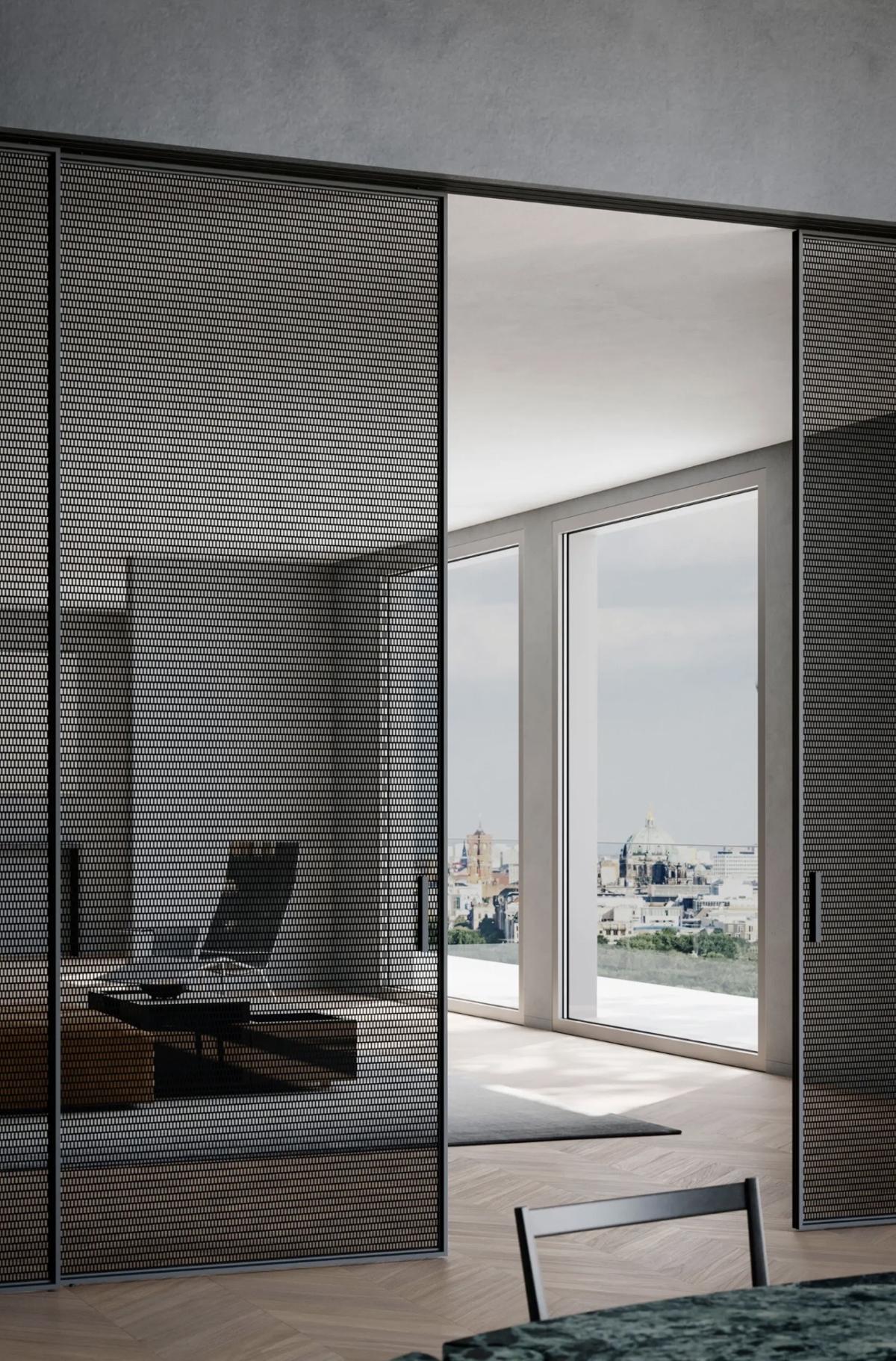
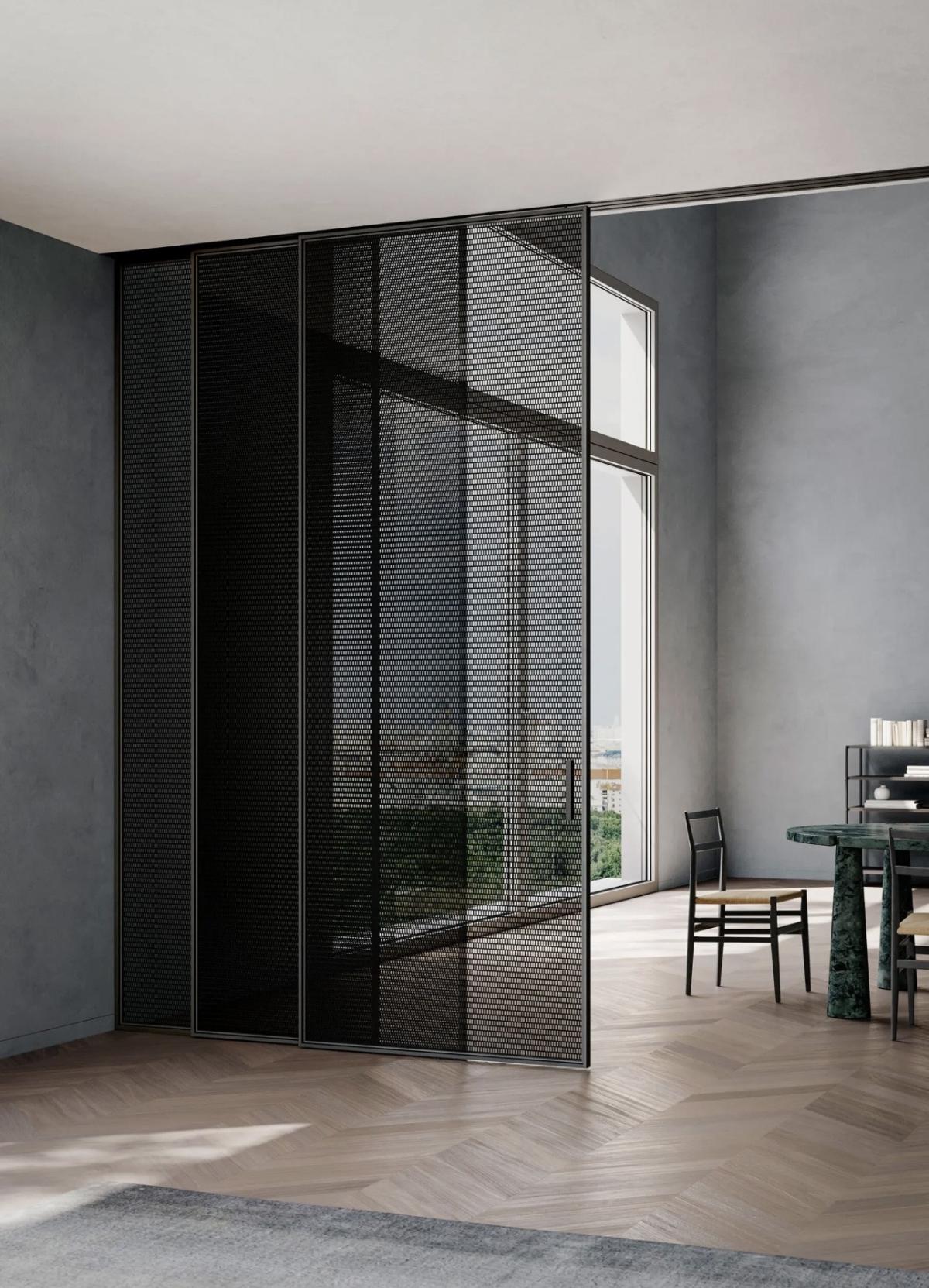
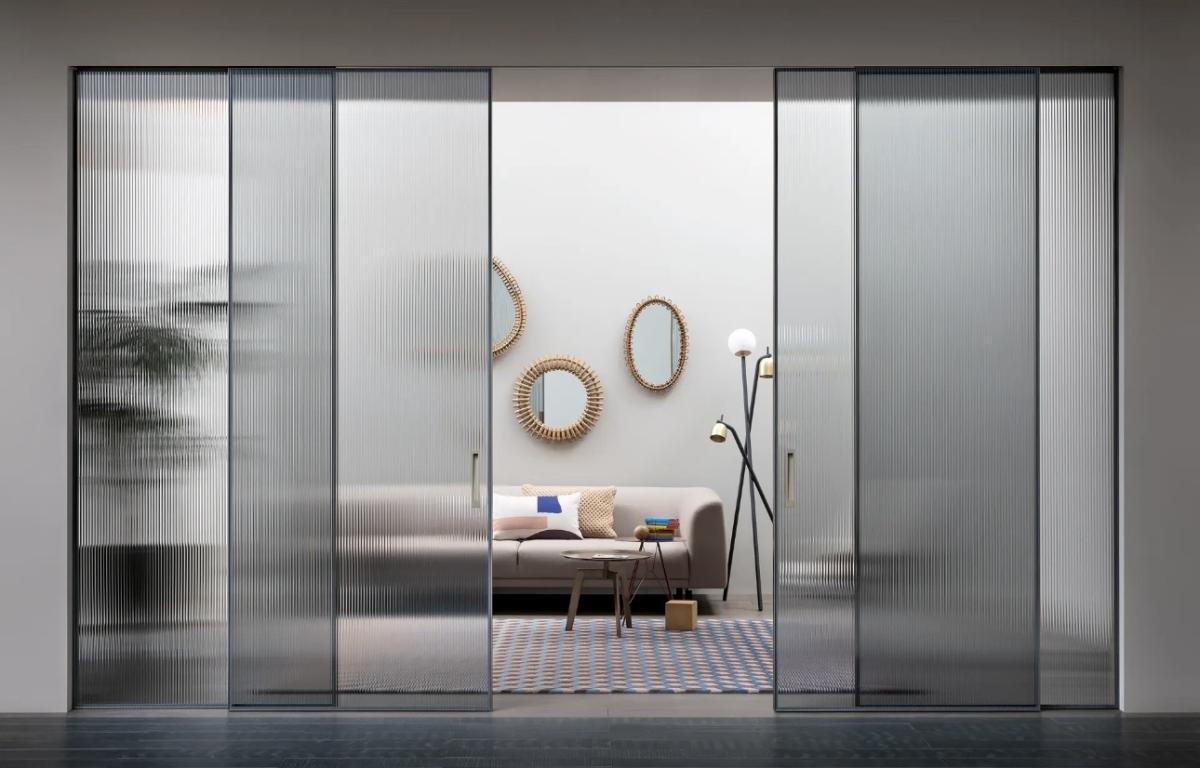
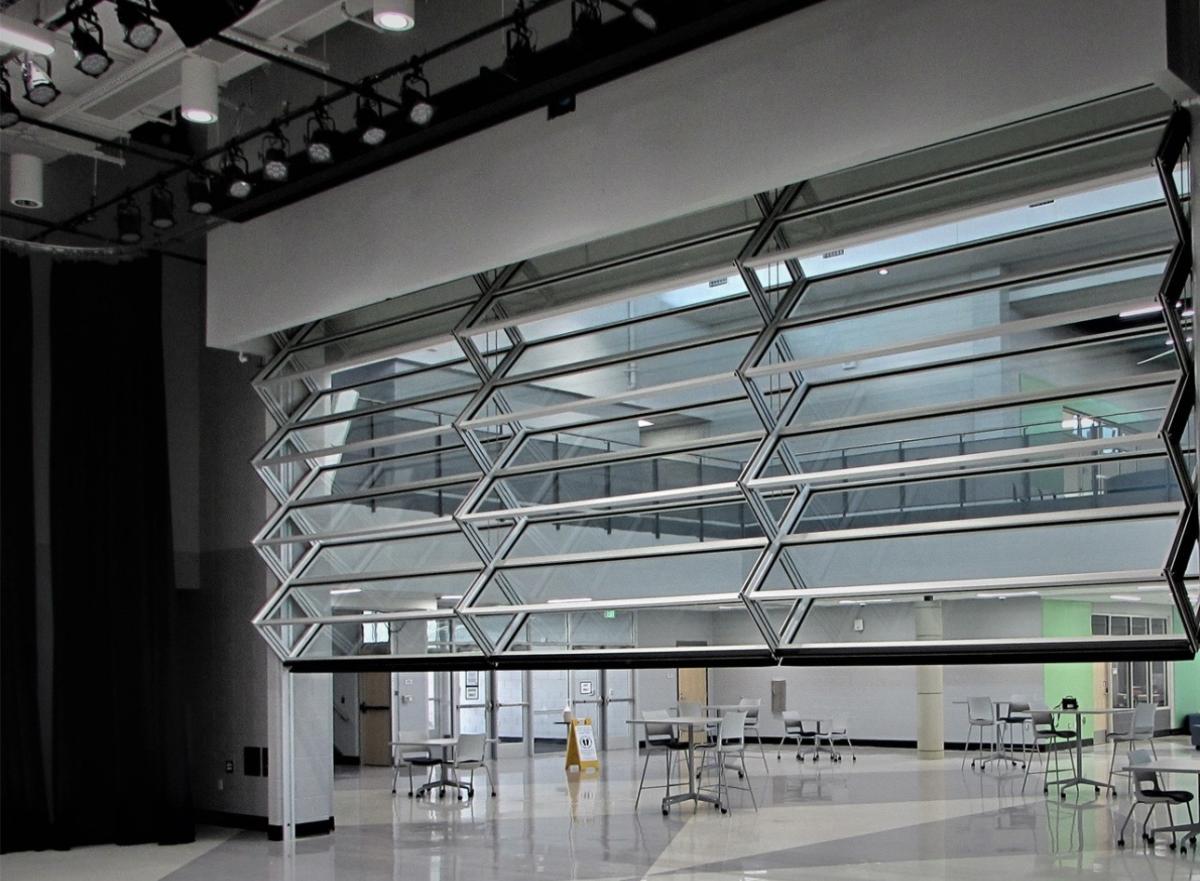
Glass movable systems are among the most preferred solutions in luxury spaces defined by panoramic glazing. They preserve maximum daylight penetration while visually delineating functional zones.
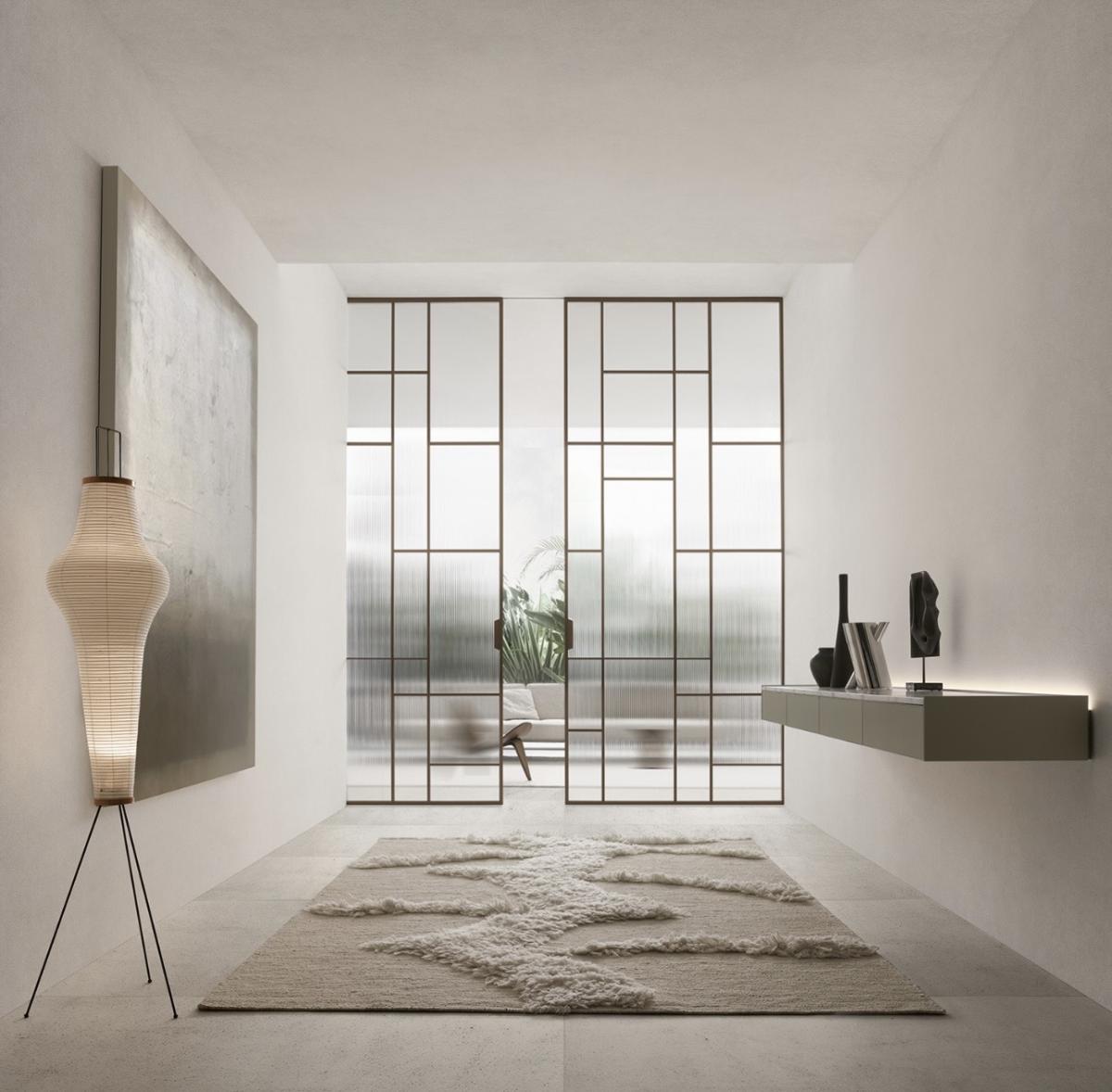
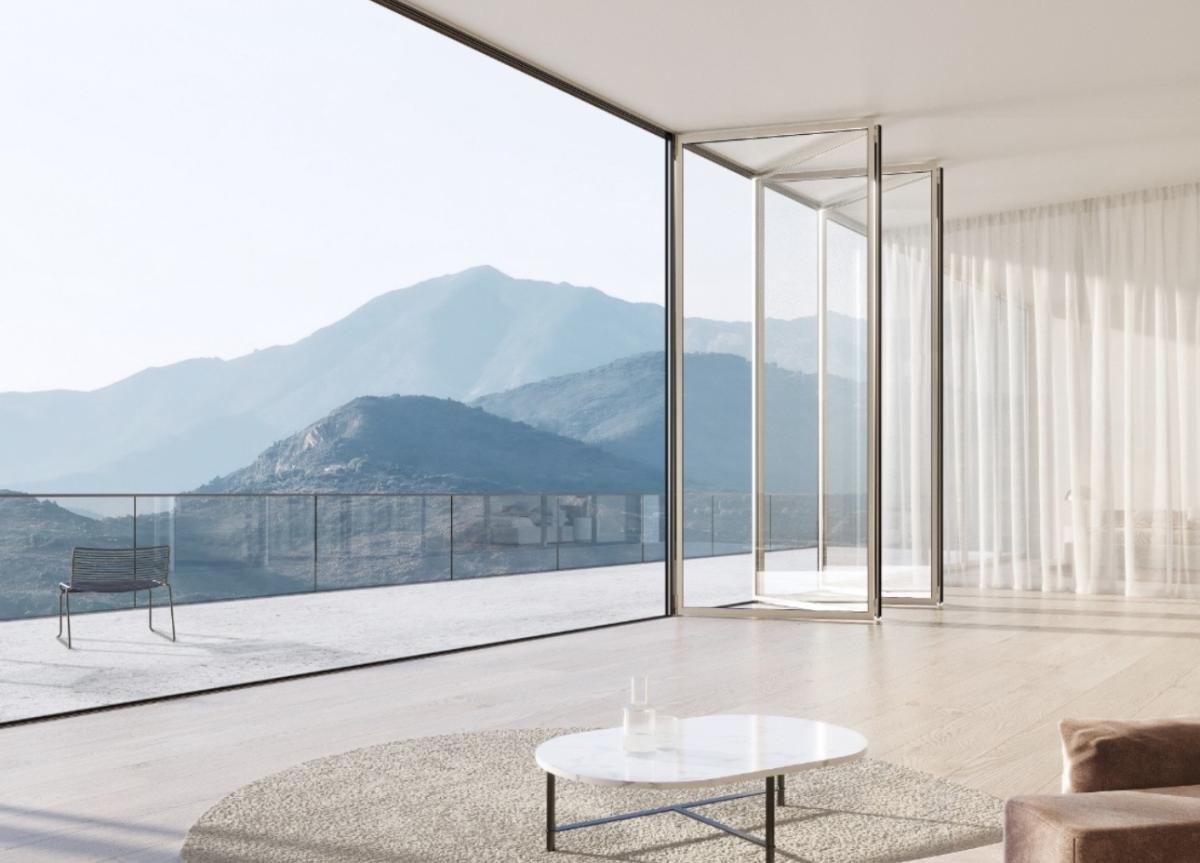
Companies such as NanaWall and dormakaba offer minimalist sliding and folding glass systems with ultra-slim profiles. Solutions range from finely profiled aluminum frames to fully frameless constructions.
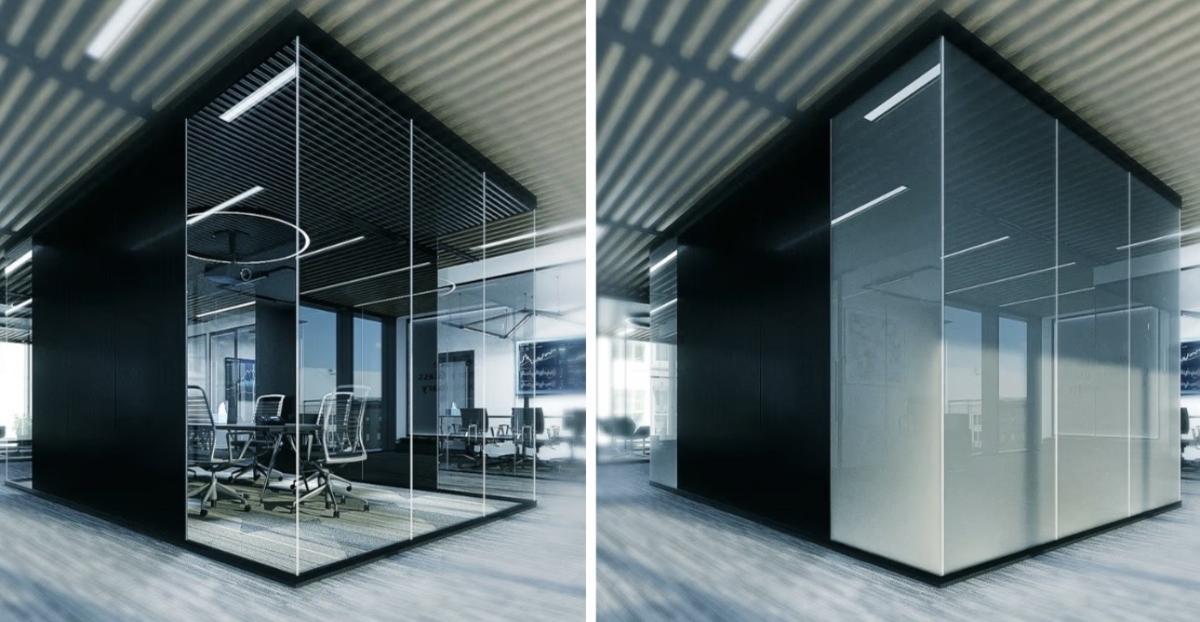
Technical specifications may include tempered or laminated glass between 10 and 16 mm thick, double glazing for enhanced acoustic and thermal performance, and electrochromic “smart glass” capable of adjusting transparency via electrical impulse—eliminating the need for curtains or opaque panels.
Manufacturers such as Sky-Frame and Solarlux also provide structural sliding systems with triple glazing and Uf values below 1.0 W/m²K, making them suitable even for passive house standards and highly energy-efficient buildings. In some systems, profiles are fully recessed into floors, ceilings, and walls, allowing the glass partition to virtually disappear when open.
Options include sliding, folding, or pocket-retractable configurations, with integrated blinds, frosted finishes, or real-time adjustable electrochromic glazing. Flush track systems embedded into marble or natural parquet allow uninterrupted flooring continuity. Some manufacturers integrate magnetic soft-close mechanisms and automated locking systems with smart-card or biometric access control.
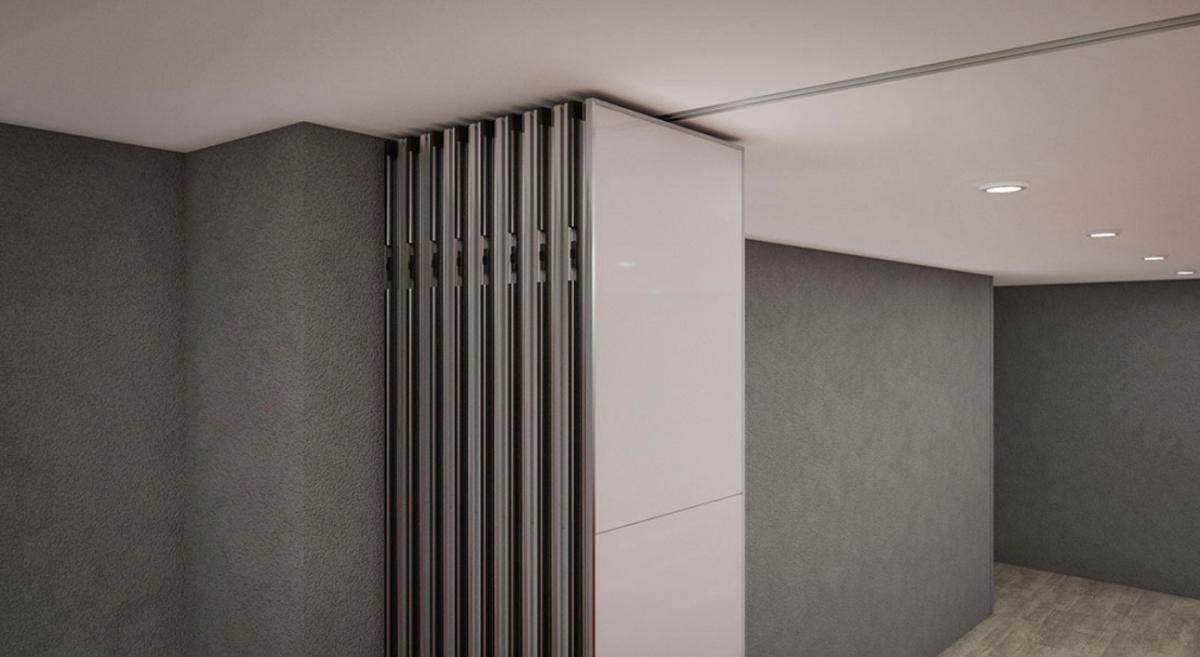
The highest-tier solutions rely on ceiling pocket systems—recessed cavities into which panels fully retract. When open, no visible trace of the partition remains. This approach is particularly compelling in spaces with elevated ceilings.
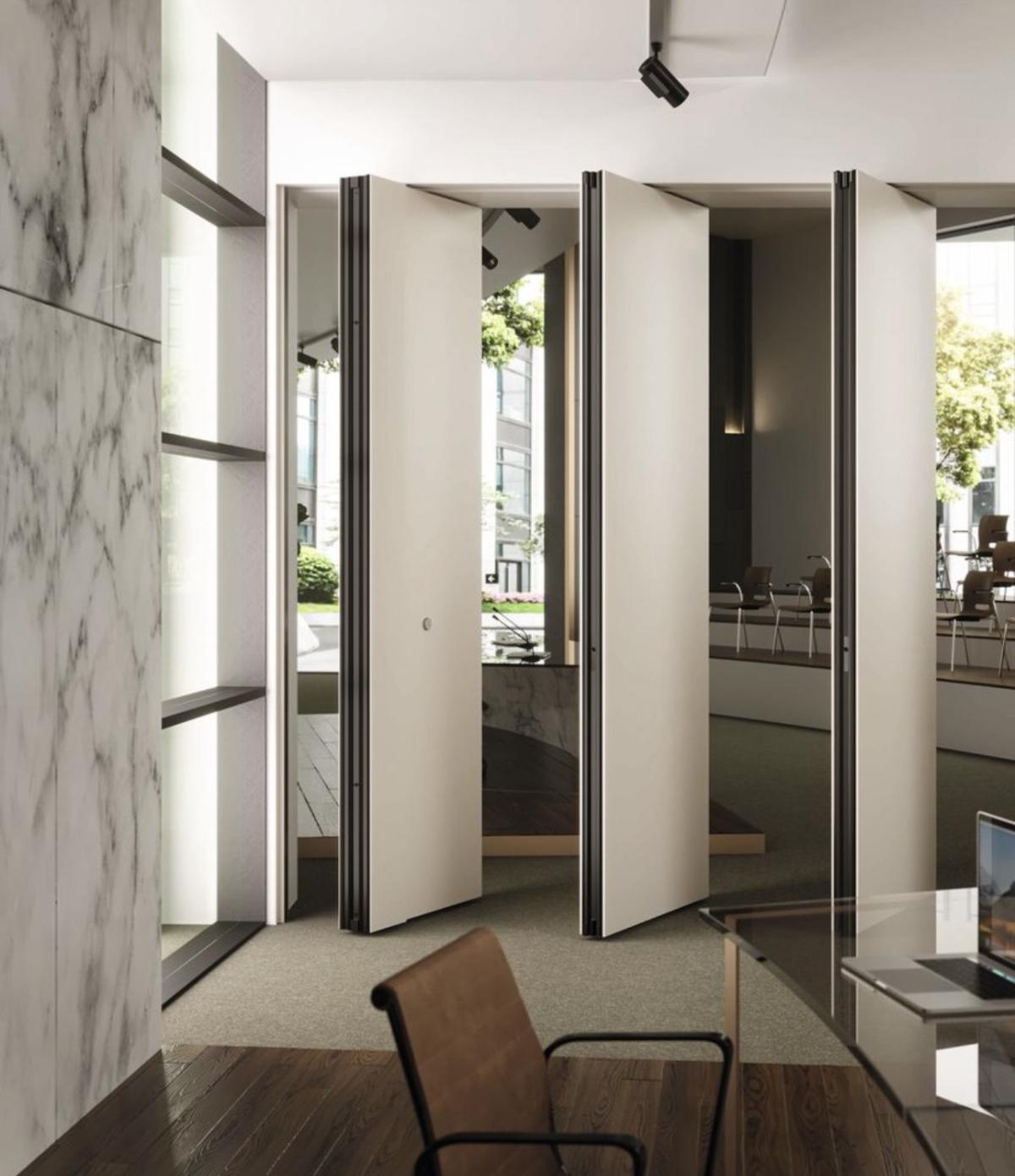
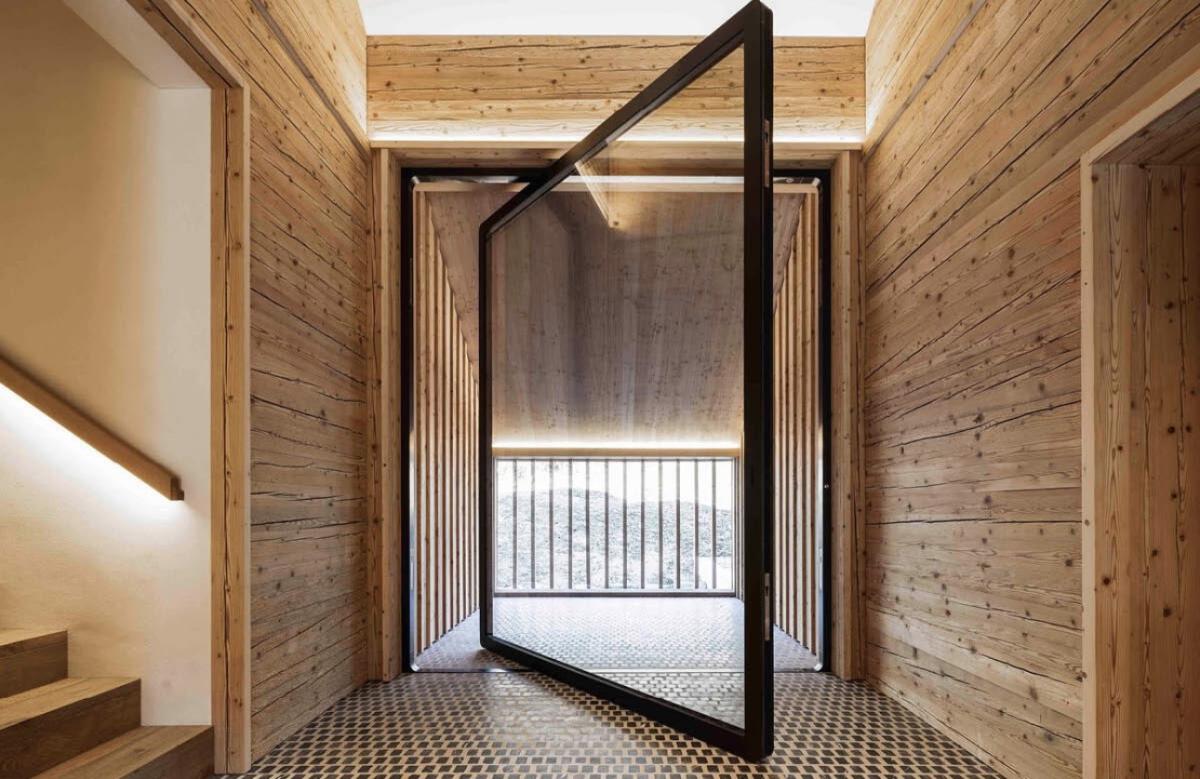
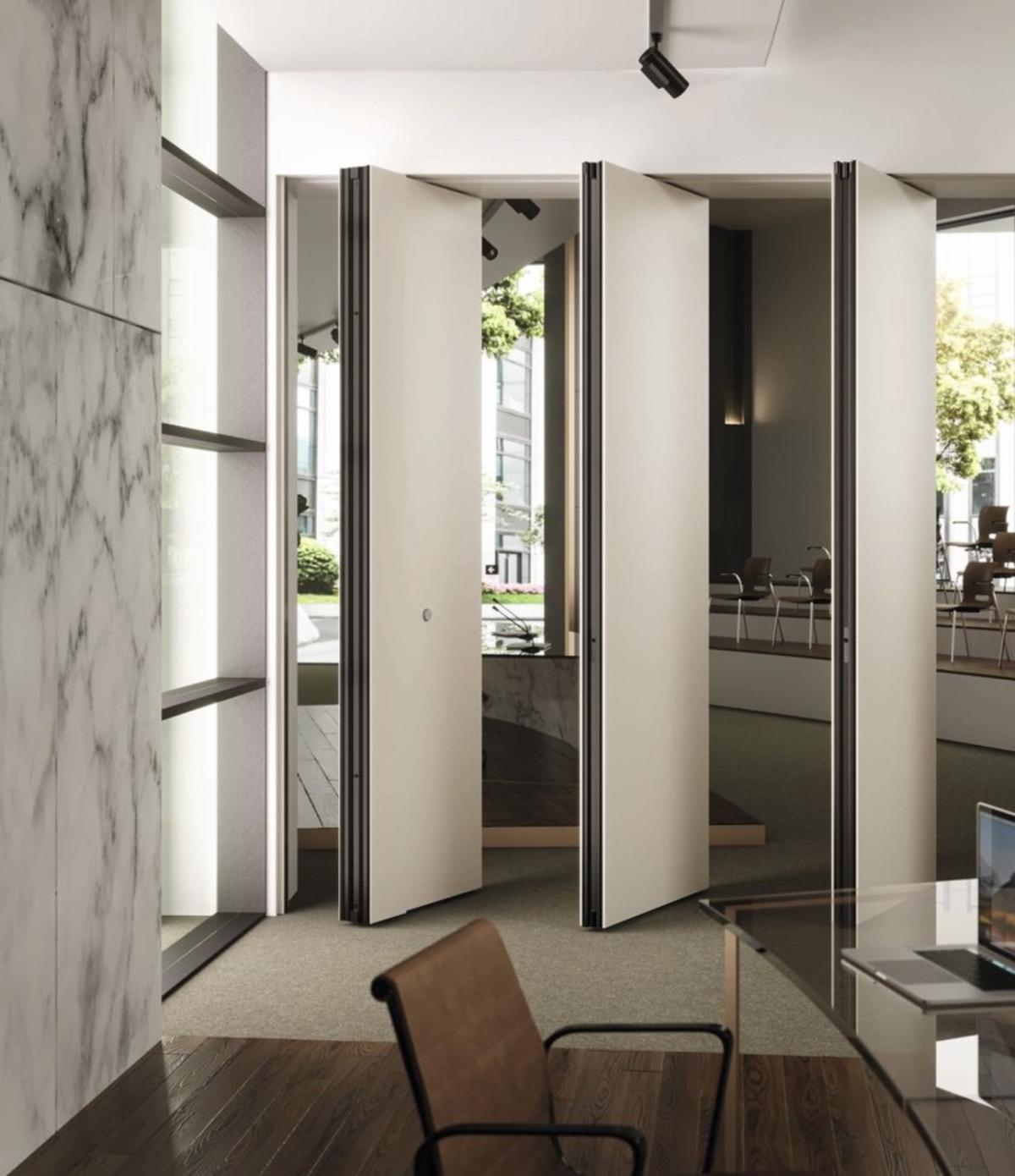
Mechanisms utilize heavy-duty roller carriages with bearing systems capable of supporting 100 to over 200 kilograms per panel. Motorized versions integrate silent electric drives controlled via smart home platforms such as KNX Association, Lutron, or Crestron. Pivot panels with central rotational axes further enhance the sense of architectural fluidity, creating the impression of floating walls.
In the most advanced implementations, ceiling pockets are lined with acoustic materials to absorb vibration during operation. Motors incorporate soft start/soft stop software, ensuring silent and fluid movement—even for large-format panels.
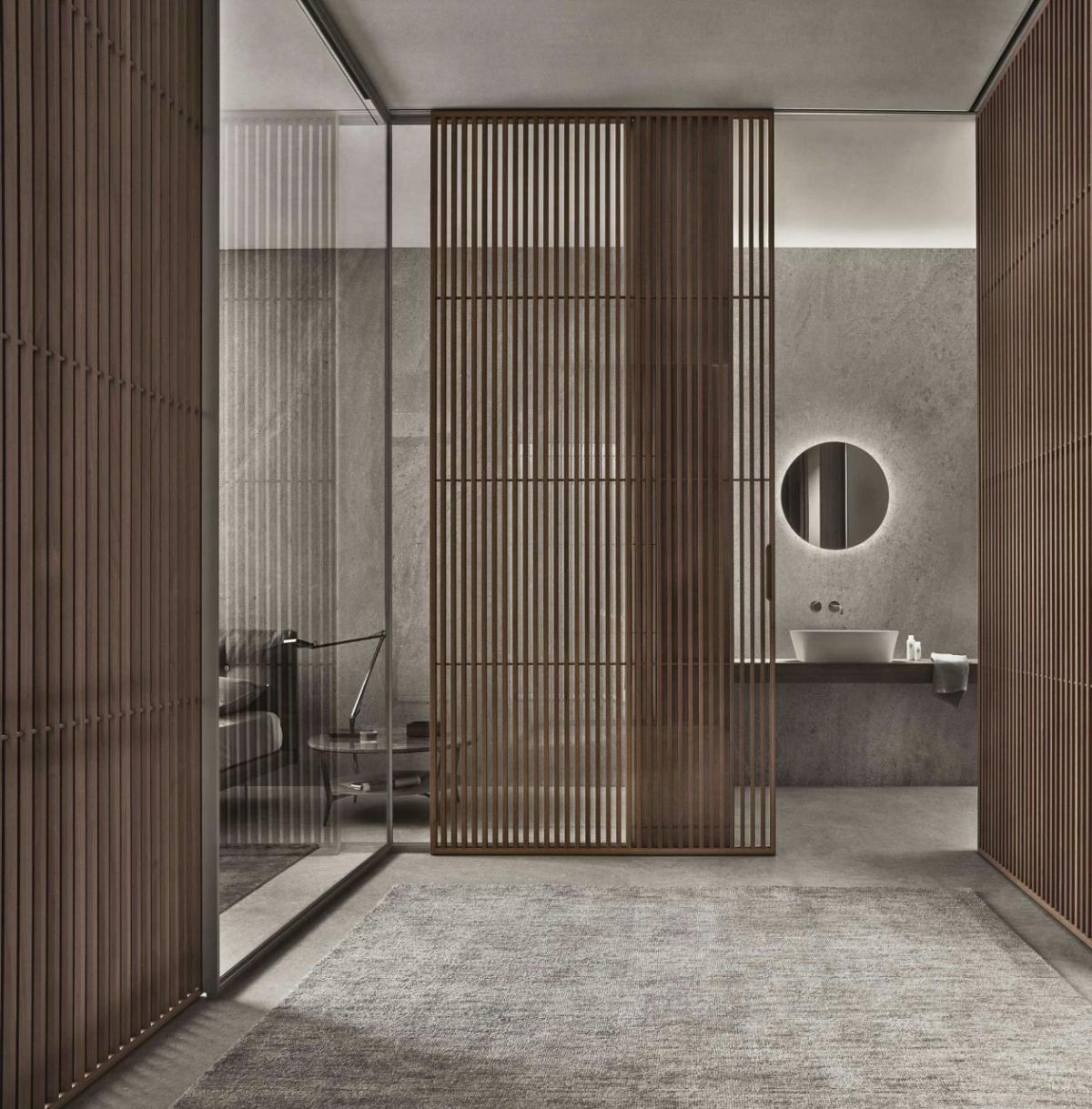
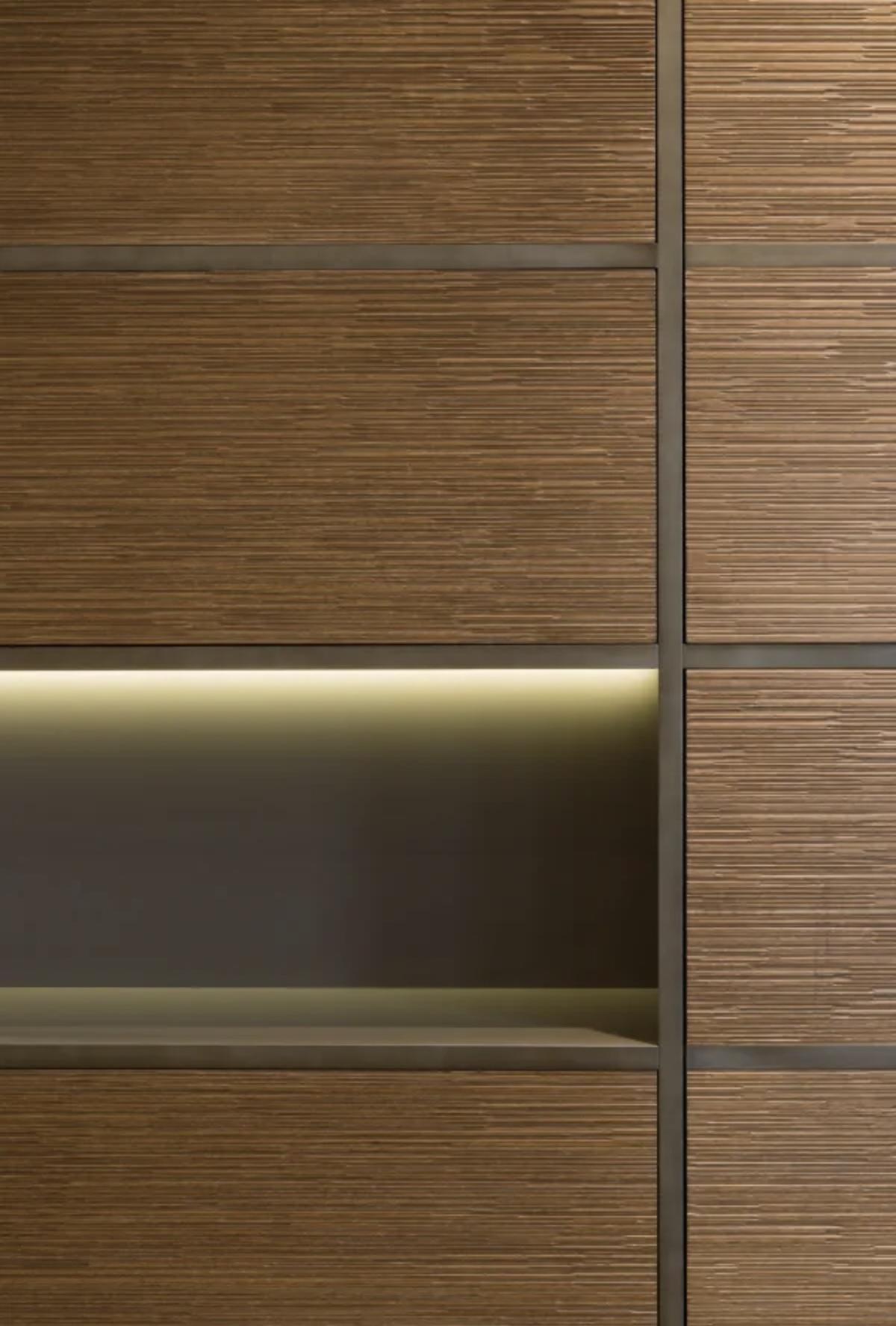
Luxury properties demand not only technical sophistication, but material refinement. Finishes may include natural oak or walnut veneer, bronzed metal sheets, leather panels, or high-density acoustic textiles.
Glass surfaces may feature low-emissivity coatings, UV filtration, or intelligent light-control treatments. Aluminum profiles are available in powder-coated or anodized finishes—from matte black to champagne and satin bronze.
Increasingly, recyclable aluminum alloys, FSC-certified veneers, and low-VOC panels are specified in response to rising sustainability standards within the premium sector.
All technical solutions are carefully coordinated with floor construction—particularly in projects incorporating underfloor heating. Designers pre-position track systems to avoid interrupting heating circuits and to maintain structural integrity. For heavier systems, localized reinforcement within the screed or integrated steel profiles distribute loads safely without risk of deformation.
In contemporary penthouses and high-end apartments, movable constructions are frequently integrated into holistic home automation systems.
A “Dinner Mode” scenario may close the kitchen, activate dining-area lighting, and deploy a partition toward the sleeping zone. An “Open Loft” scenario may retract all panels into ceiling pockets, unifying the entire volume into a singular architectural statement with uninterrupted panoramic exposure.
Integration through protocols such as KNX Association, Lutron, or Crestron enables synchronization between movable walls, lighting, climate systems, and security within a unified digital ecosystem.
Within international architectural practice and the projects defining today’s high residential segment, a clear and enduring tendency emerges: adaptive architecture. Here, the partition is no longer perceived as a static boundary, but as a tool for orchestrating space. It does not permanently divide; it enables calibrated control over intimacy, representation, and functionality—without disrupting the overall volume or the luminous concept of the interior.
In a grand luxury property defined by a panoramic façade, generous spatial volume, and continuous flooring, the movable construction is not merely a technical response to a practical issue. It is embedded within the architectural strategy from the conceptual stage.
Through it, a single volume may transform from an open expanse into a sequence of intimate zones—bedroom, spa, dining room, or private salon—and back again, without compromise in aesthetics, acoustics, or spatial perception.
It is precisely this capacity for transformation that distinguishes the contemporary luxury residence. It is not a fixed plan, but a living system—a space that responds to the rhythm of its inhabitants and evolves alongside their needs.
All images courtesy of: Sky‑Frame AG (Switzerland), Rimadesio S.p.A. (Italy), Lualdi Porte S.r.l. (Italy), Solarlux GmbH (Germany), LaCantina Doors (USA), Modernfold, Inc. (USA), Hufcor, Inc. (USA), NanaWall Systems, Inc. (USA), and dormakaba Group / Dorma Hüppe GmbH (Germany), www.archiproducts.com, cavitysliders.com, archdaily.com.
© Copyright 2026 Unique Estates. All rights reserved.