A Symphony of Speed: Inside Two Crucial Seconds in a Formula 1 Race


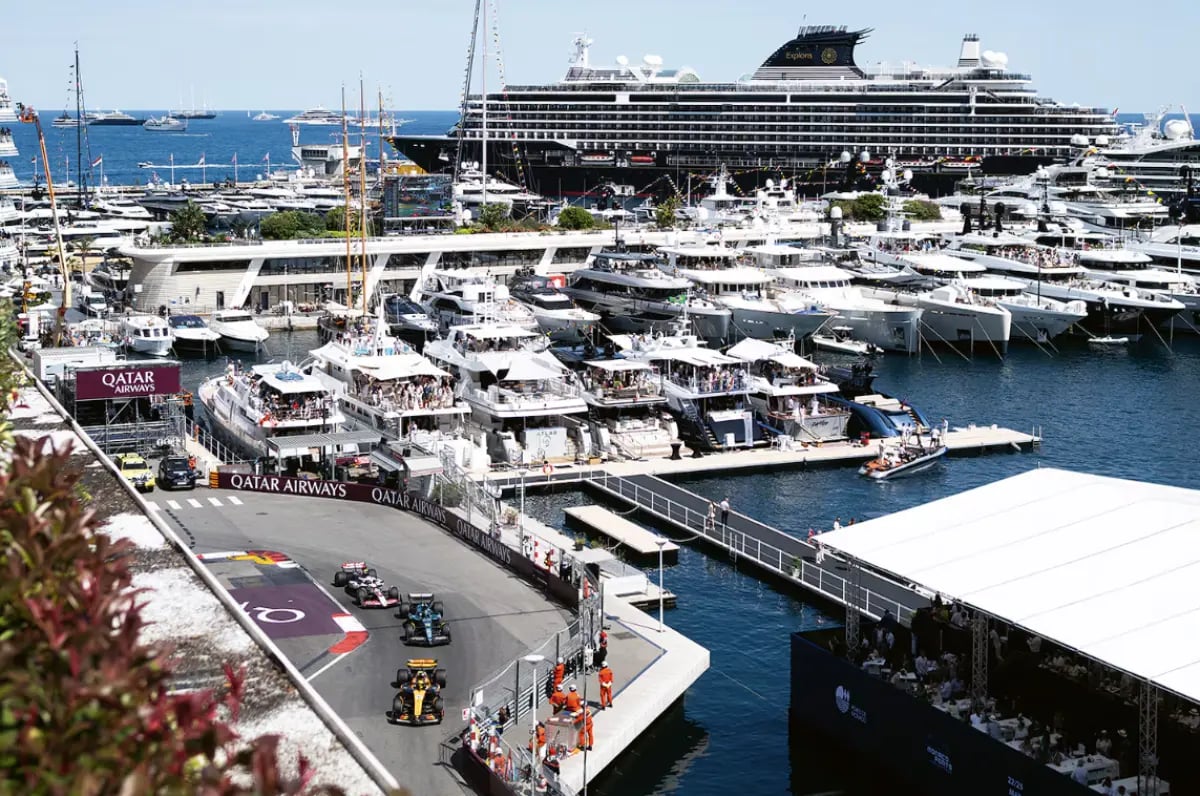
Perched on a rocky outcrop lapped by sapphire Mediterranean waves, covering a land area smaller than New York City’s Central Park, the Principality of Monaco sends its shoots high and its roots deep. Between the ever-growing tower blocks and the tunnels that channel traffic under the city, a tangle of streets clings to the surface of the rock like ivy.
These same streets have played host to the Monaco Grand Prix for almost a century. The surface is no longer compacted dirt and cobblestones criss-crossed by tramlines, and much of the built environment exists in a state of perpetual redevelopment, but the track layout remains almost identical to the one that race founder Antony Noghès arrived at after weeks of exploring on foot in the fall of 1928.
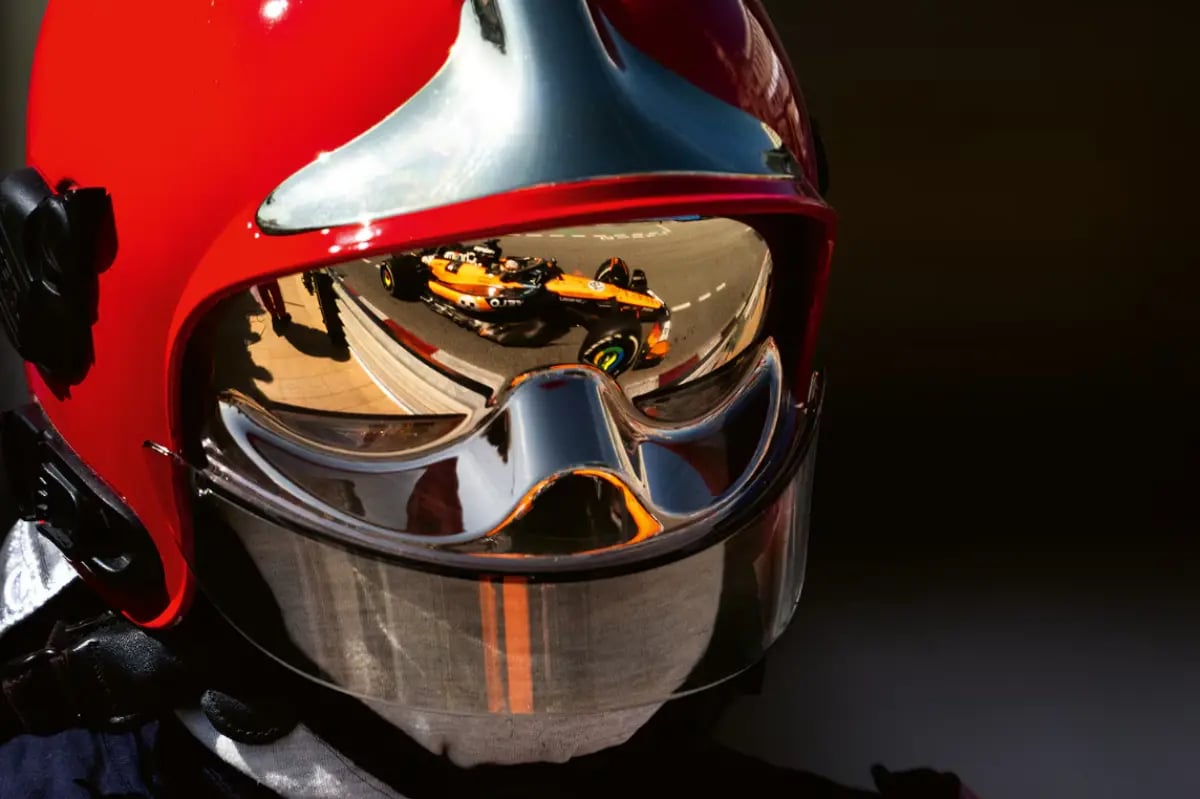
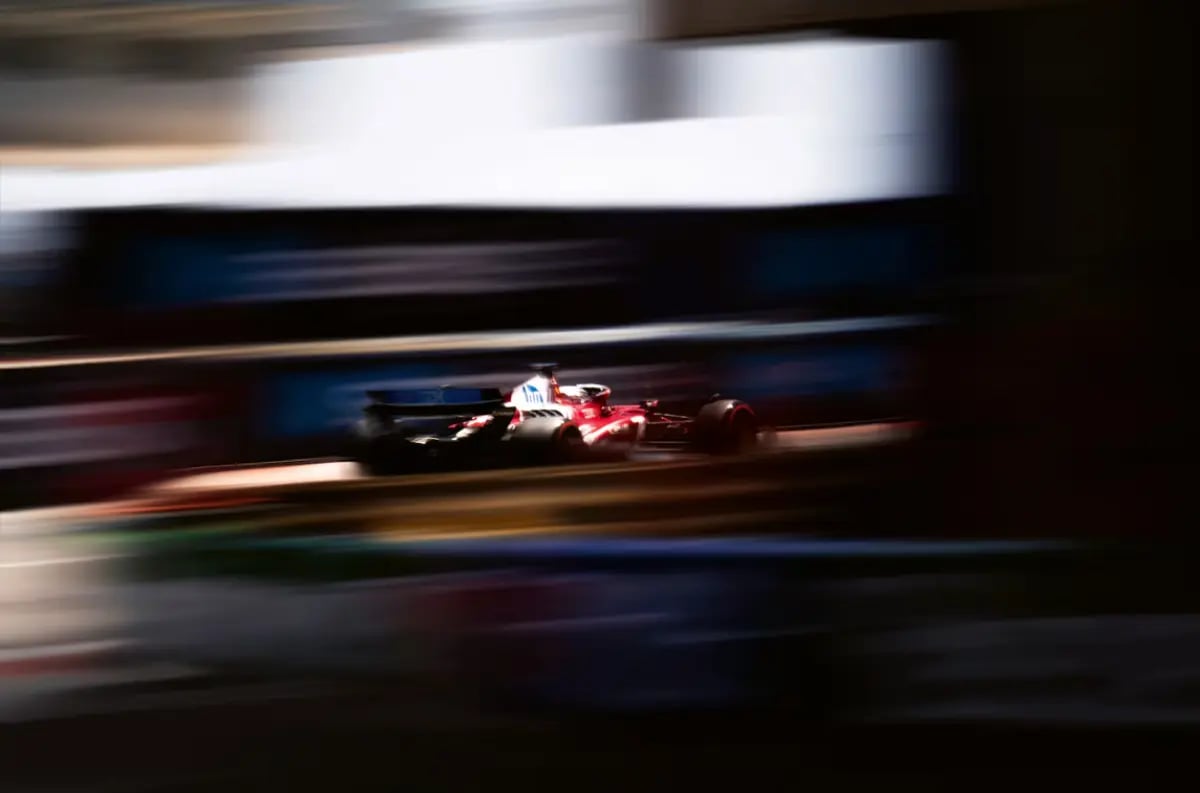
Every second counts in a motor race, not least in Monaco, where the narrowness of the streets makes overtaking virtually impossible, and perfect execution makes the difference between winning and losing. Three-time F1 world champion Nelson Piquet said racing a Formula 1 car at Monaco is “like riding a bicycle around your living room.” The first Monaco GP lasted four hours; today it is 78 laps rather than 100, lasting an hour and 40 minutes or so. A 2.074-mile (3.337 km) lap takes around 70 seconds. Here, we drill down further and look at two seconds that could make or break the race.
Modern F1 demands peak human performance to exploit its cutting-edge technologies. Every driver has a support system: a race engineer on the pit wall coordinating with factory-based strategists and a pit crew trained to change all four wheels in under three seconds. The cars can accelerate from a standstill to 60 mph (97 kmh) in fractionally over two seconds and reach a top speed in excess of 200 mph (322 kmh). Each has more than 250 sensors monitoring every aspect of its performance, generating up to a terabyte of data over the course of a weekend.
Mission-critical data is transmitted live to the engineers on the pit wall, and via satellite to the operations center at the factory, at a rate of around 30 megabytes per lap—one every two seconds. Here the pre-race simulations are reshaped as the race evolves.
The most frenzied period of any Monaco GP is the phase around the pit stops, where overtaking opportunities arise. It’s an act of teamwork, an elaborate dance in which all involved must hit their marks. The task sounds simple enough: lose as little time as possible. For the driver that means going as fast as they can on the in-lap to the pits, executing a perfect stop for the wheel change, making a crisp getaway when they get the green light to leave again, then judging the grip available from the new tires for optimum speed on the out-lap.
Any operational slip here could mean losing places. That’s what makes the timing of the stops so important, and these decisions are based on a complex set of inputs. Most teams run a McLaren-developed system called Atlas, which helps them calculate where their car will feed out in relation to others after a stop.
That’s where we frame our two seconds. In every race, each driver must run two of the three available tire compounds – soft, medium, and hard, where durability is (theoretically) inversely proportional to speed. For the 2025 Monaco GP, racing’s governing body introduced an experimental rule mandating two pit stops per car, with the aim of injecting more strategic jeopardy. We join the race at the second round of pit stops—for the leading players, the last opportunity to shake up the order.
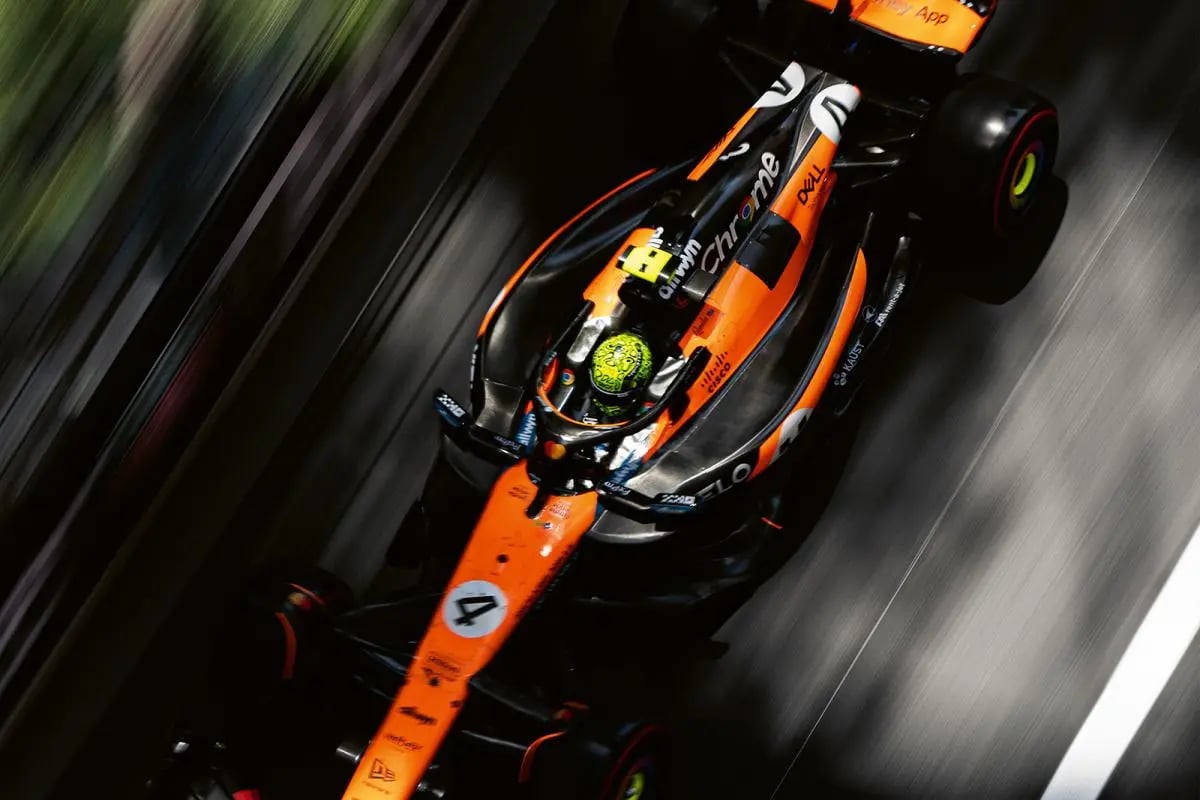
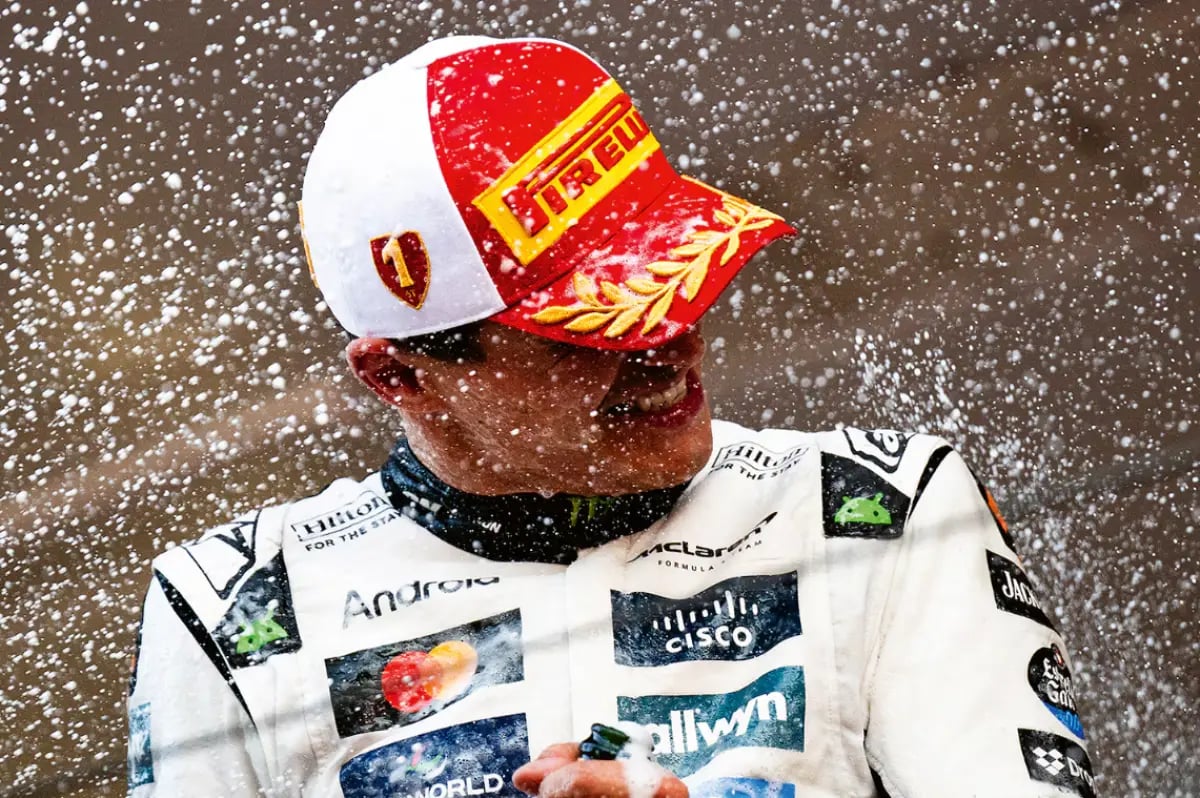
McLaren driver Lando Norris qualified on pole position, narrowly, from Ferrari’s Charles Leclerc, and has led throughout. Norris’s team-mate Oscar Piastri had a scrappy qualifying by his standards and, as the lap count enters the late 40s, is 15 seconds behind the leader and drifting backwards. Poised just one second behind him is Red Bull’s Max Verstappen, the world champion.
Red Bull’s choice to start Verstappen on the hard-compound tires when the rest of the frontrunners set off on mediums has telegraphed their game plan. It’s a big bet: go deeper into the race before their first stop, then deeper still, so Verstappen takes the lead when the others make their second pit stops. Then dig in and hope for an on-track incident substantial enough for the race to be stopped, or paused behind the Safety Car, enabling Verstappen to lose less time, or none at all, making his second tire change.
This much was clear to the frontrunners’ strategists even before Verstappen’s race engineer, Gianpiero Lambiase—who speaks with the laconic air of an airline pilot—started coaching the driver on how best to preserve his tires. That half-megabyte of data per second includes the surface temperatures of the sensitive Pirelli rubber on each corner, and it’s been spiking as Verstappen spins his rear wheels as he accelerates out of the hairpin: “Watch your rear tire slip exit Turn 6.”
As the window for the second stops opens, it’s a case of who blinks first. McLaren brings Piastri in at the end of lap 48. He is too far behind Leclerc to be a threat, but McLaren wants him back on track ahead of Leclerc’s teammate Lewis Hamilton, who could hold him up.
Ahead, Norris is running into the unforeseen consequences of the two-stop rule: a train of eight cars led by 10th-placed Alex Albon, who is holding them up deliberately so his teammate can pit and rejoin without losing ninth. Cars that are about to be lapped by the leaders must move over but this still costs time.
“Waved blue flag for Car 22 (TSU) timed at 16:06:03” appears on the timing screen, showing that Verstappen’s teammate Yuki Tsunoda—car four in that clump of eight—has been signaled to get out of Norris’s way.
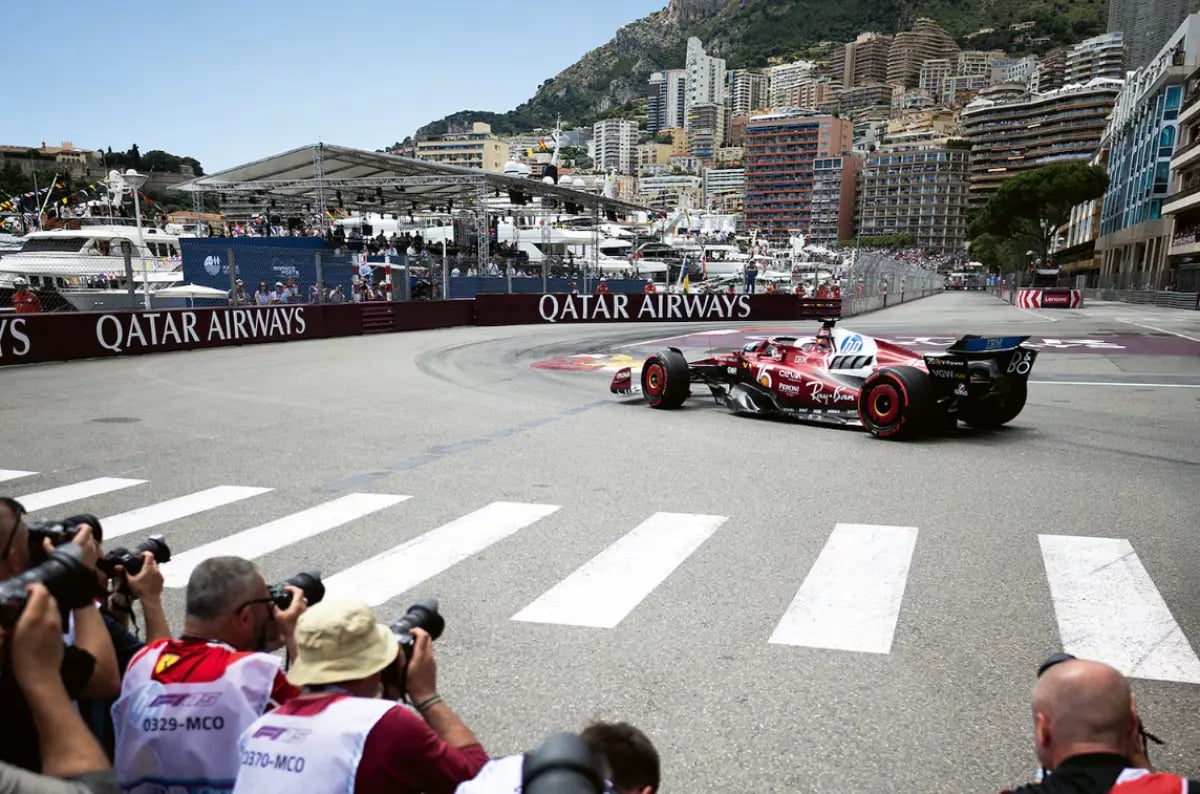
Leclerc usually prefers not to talk on the radio, while engineer Bryan Bozzi feeds him information in a businesslike tone. Bozzi has been reporting Norris’s lap times, mostly in the low one minute 14 seconds, and he says: “Norris 15.7 in traffic.” That’s all Leclerc needs to know.
The gap between Norris and Leclerc has shrunk from 6.3 seconds to 5.4 seconds. On their Atlas system, Ferrari’s strategists can see that in another lap Leclerc will run into the same traffic snarl-up. If he pits now, he will feed out into a relatively clear track.
At the first round of stops, the Ferrari pit crew turned Leclerc around in two seconds. Norris was stationary for 0.8 seconds longer. A similar margin this time around could make Norris’s lead even more precarious.
Leclerc is stationary for 2.2 seconds. As he leaves the pit lane, Albon is just letting Norris by further around the circuit. McLaren knows it has no choice but to stop now, or risk Leclerc passing while Norris is in the pits. It can also see Norris is likely to return to the track behind Verstappen. On the radio, engineer Will Joseph tries not to sound too urgent: “Leclerc has pitted… 100 percent pace,” he tells Norris.
“And push,” Lambiase tells Verstappen. “Everything you’ve got, Max.”
One of the most important—and perilous—sections of the Monaco circuit is the Piscine (so named because the track skirts a swimming pool), which is the fast right-left of Turns 15 and 16, along with the left-right sweep that precedes it. Turn 15 is the most difficult corner on the Monaco lap because the fastest line through it requires the driver to skim the Armco barrier. A millimeter either way and you lose vital fractions of a second—or crash the car.
Normally, the drivers can leave a margin here, but Norris cannot afford this. He must stem the time loss to Leclerc. This could be the most important two seconds of his race. Turns 13 and 14 require just careful aim and a feather of the throttle to carry 143 mph (230 kmh) through the corner, increasing to 148 mph (238 kmh) as he drives parallel to the pool.
Then he begins lifting off the accelerator just before he hits the brakes, overlapping the movements so he is still 30 percent on the throttle as he is fully on the brake, deftly manipulating the inertial forces to help the car turn. As the apex of the corner looms, he flicks the gearshift twice, dropping from sixth to fourth. The engine revs fall from 11,200 to 9,000 as car speed reaches its slowest point through the corner: 71 mph (115 kmh). Norris is a controlled whirl of activity: as he steers left out of Turn 16 he starts applying the throttle before releasing the brakes, to help rotate the car. Within 10 milliseconds of each movement, the data has reached the pit wall for later review.
During this two-second snapshot, the carbon brake discs have glowed red hot at a peak of 1,472 degrees Fahrenheit (800°C), the car has traveled nearly 330 feet (100 m), and the engine’s crankshaft has rotated more than 300 times. In the McLaren garage, the pit crew removes the next set of tires from the blankets in which they’ve been heated to 158 degrees Fahrenheit (70°C). Thirteen seconds behind, Verstappen is in the tunnel under the Fairmont hotel, pushing to make sure he is ahead when Norris leaves the pits.
All of this goes unseen on the international TV feed, where the director has been distracted by Mercedes’ George Russell missing the chicane while trying to force his way past Albon. In a flurry of speed McLaren’s pit crew services Norris in 2.2 seconds and, as he returns to the track, Joseph reassures him he is ahead of Leclerc, while Verstappen is already in Turn 1.
“You’re doing great, mate,” says Joseph. “Obviously Verstappen will try to hang it out for a VSC [Virtual Safety Car] or worse.”
“Settle in, Max,” Lambiase tells Verstappen. Verstappen has the race lead—for now…
Read more from category Lifestyle

Unique Estates Life – Media Partner of BMW Ladies’ Spring Drive
30/04/2026LifestyleLora Petrova
Portugal for the senses: detox and wellness experiences
27/04/2026LifestyleSylvana Vassileva
The new luxury: Adaptive architecture
01/04/2026LifestyleSylvana Vassileva
Inside Hong Kong: The Secret Side of this Special City
27/03/2026LifestyleUnique Estates