06/04/2026
For buyers and tenants

“Preserve, protect, restore, and adapt” might be the credo of historic architecture conservationists. Their idea is to preserve what a building means to us, to retain its design and original materials, sensitively repaired, restored and maintained—and adapted for our use into the future.
“Preservation work is not about stopping time,” said Dr. Christine Henry, an architect and preservationist, “but instead about creatively including history in our built environment as it continues to evolve and change with us.”
In that evolution, residential architecture adds three words to the credo: “Reimagine, reinvent, and repurpose.”
Since the mid-20th century, imaginative architects have transformed utilitarian buildings—barns, warehouses, even churches—into luxurious private homes. Converting such complex structures into contemporary dwellings requires expert architectural insight and engineering. The rewards are enviable locations, original architectural details, ample space, natural light, and 21st century creature comforts.
Consider this portfolio of luxury homes reimagined from their original high purposes: A lighthouse, a 19th-century Adirondacks “Great Camp,” even a Victorian-era power station resurrected into a luxurious contemporary housing complex.
In this Luxury Defined collection we spotlight five reimagined homes that set chic contemporary standards for design, comfort, detail—and in conversation with history.
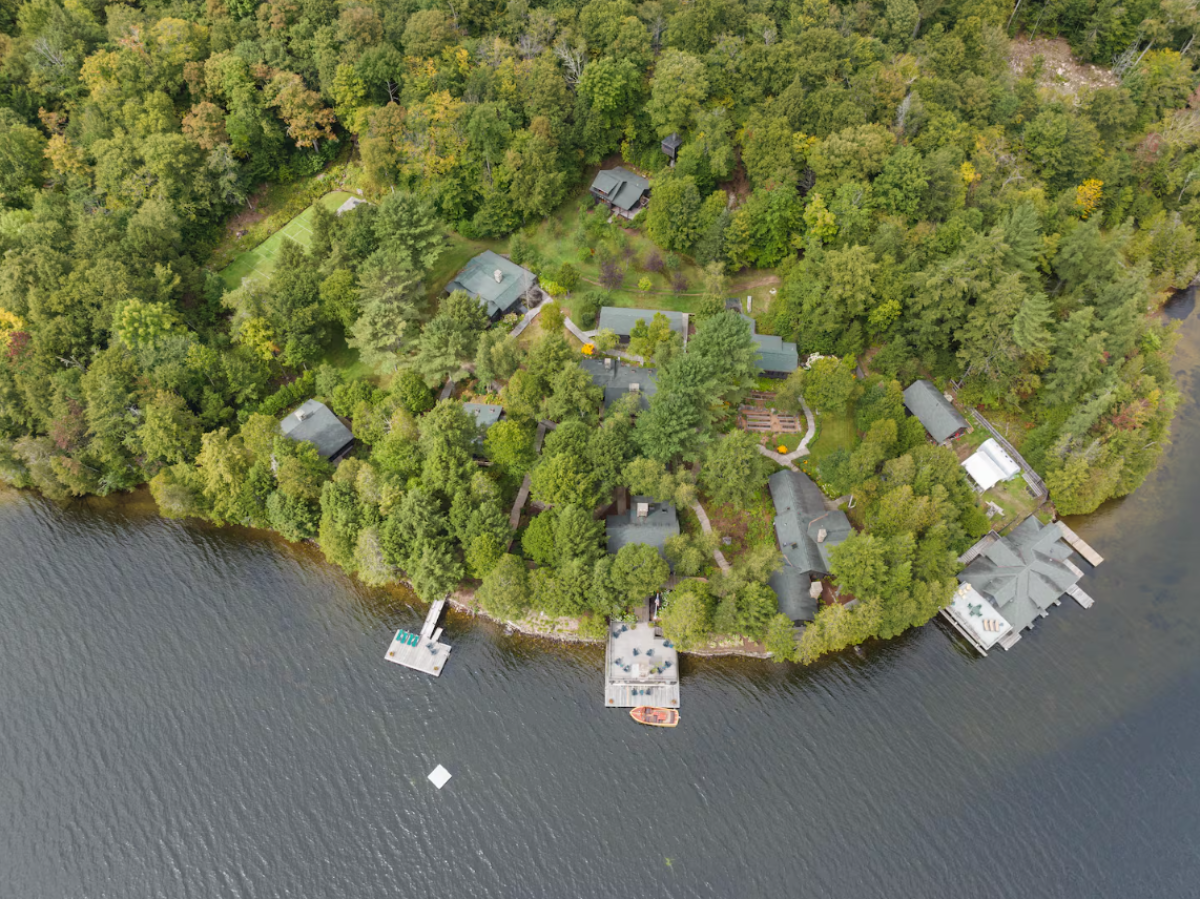
Ah, the Gilded Age! Back in the late 19th century, wealthy families fled their teeming summer cities for the cool woods of the Adirondacks. There, they built the so-called Great Camps—huge rustic homes in vast compounds— and Gull Rock Camp on New York’s Lake Placid is perhaps the finest of them all.
Architect Max Westhoff designed the camp in 1902 for Pennsylvania Railroad executive Theodore Ely as a complex of purpose-built, log-framed structures covering 16,000 square feet, or about 1,500 square meters, of the lakeside topography.
The historic core of the camp includes the main cabin, guest quarters, and dining pavilion. Their bespoke interiors provide elegantly finished log walls, timber beamed ceilings, gleaming wooden floors, and massive fieldstone hearths and chimneys.
After a painstaking restoration in 1994 by the current owner, the property offers 11 historic structures connected by scenic walkways in a private, wooded setting of nearly 28 acres (roughly 11 hectares). A separate, mainland parcel has a four-bay boathouse, with living quarters, full amenities, and ample parking.
The camp offers direct access to the village, private hiking trails, and the vast wilderness of the Adirondack Park, as well as convenient access to regional and international airports in Albany, Burlington, and Montreal.
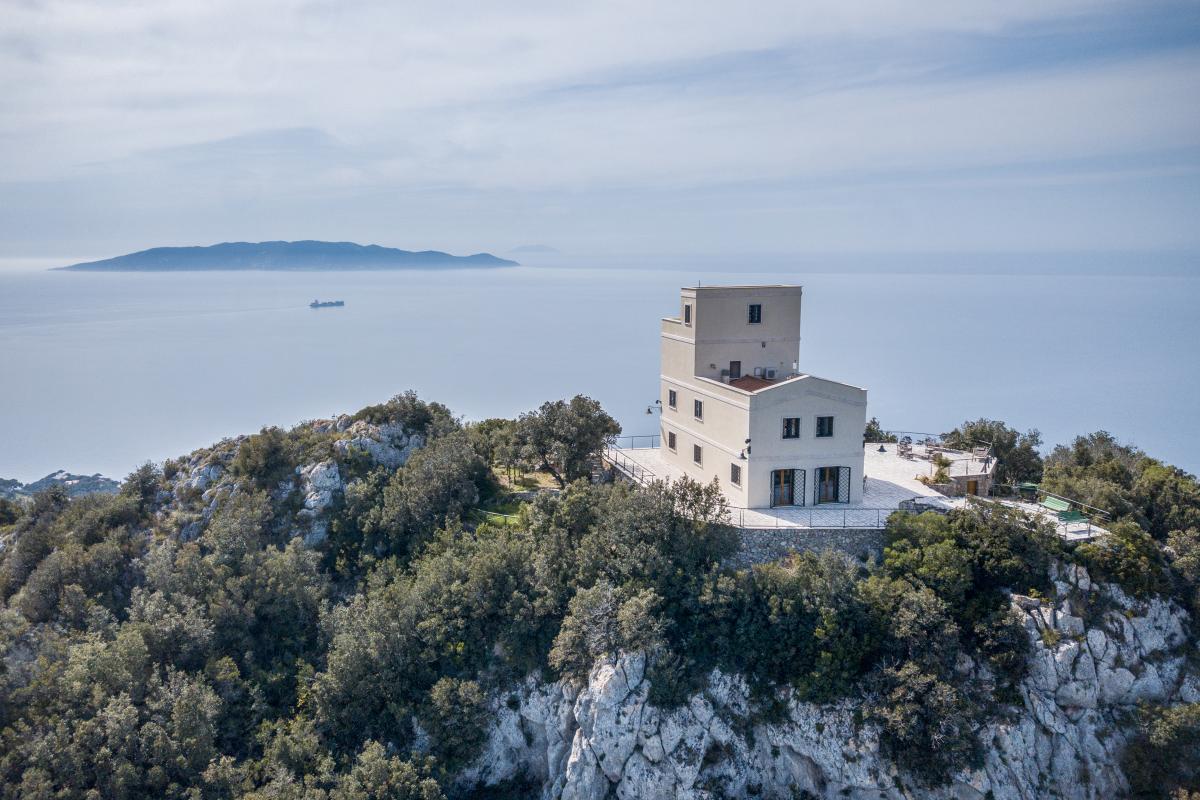
This three-story, white stucco villa is built into the sea cliffs of the Monte Argentario Peninsula, just outside the Tuscan resort town of Porto Santo Stefano.
The former lighthouse was built by the Italian Royal Navy in the 1800s and later converted into a coastal artillery defense to protect Italian waters during World War II. In 2011, the 5.4-acre (2.2-hectare) complex was sold into private hands and underwent a five-year restoration.
The façade of the lighthouse tower was reinforced with concrete and re-plastered. The 3,228-square-foot (300-square-meter) interior is laid out over three floors: The central living space and gourmet kitchen are on the ground floor. Four of the five bedrooms are on the second floor along with three bathrooms. A staircase in the building’s stone tower rises to the penthouse, a one-bedroom, one-bathroom suite with dazzling sea vistas.
The gardens are a paradise of native plants and flowers, and stone terraces, shaded by towering cypresses for long alfresco lunches under the Tuscan sun. Two staircases carved onto the cliffside descend to the sea. The swimming pool has its own beautiful stone terrace with the Tuscan Archipelago as the backdrop. A self-contained, two-story guest house; a restored outbuilding; private road access and ample parking (with space for a helipad) complete the picture.
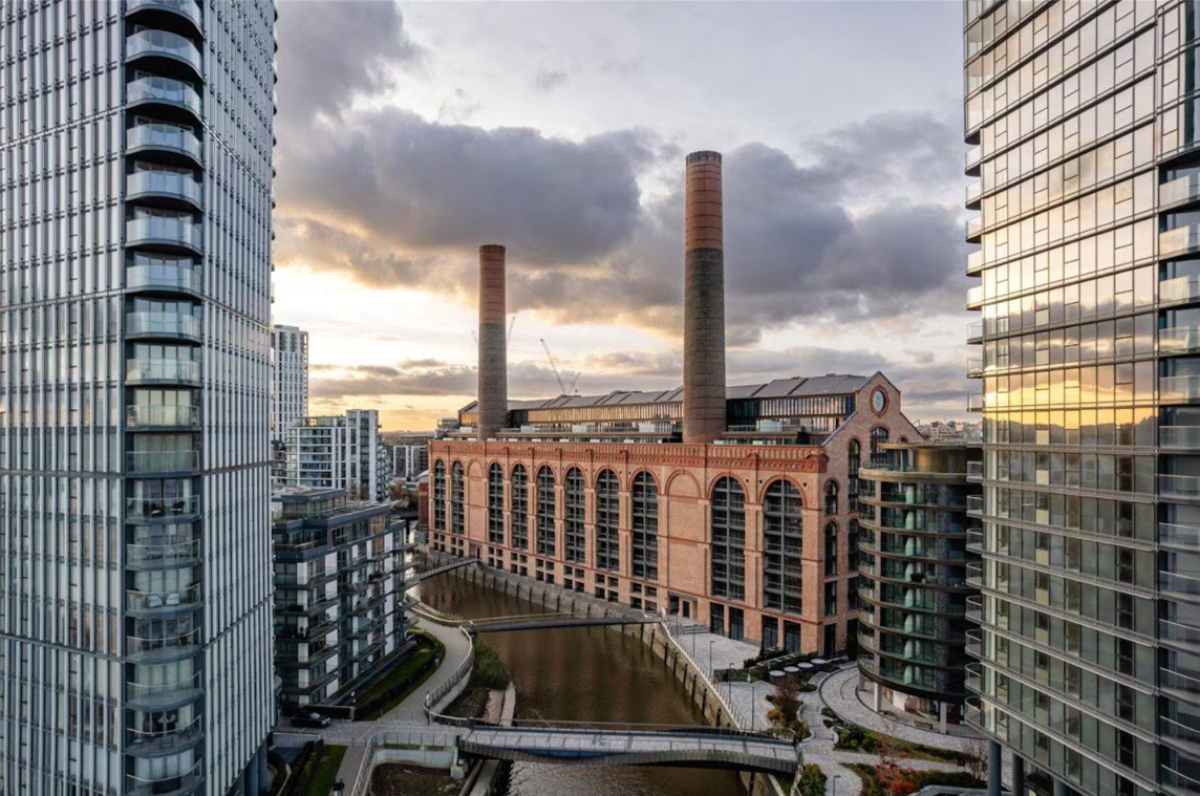
This two-bedroom, two-bathroom apartment has a coveted place in Powerhouse, a masterfully reinvented structure that powered London’s Underground for 97 years. Today, it’s reimagined as the residential, entertainment and retail hub of the 8.85-acre Chelsea Waterfront development on the River Thames and Chelsea Creek.
Master architect Sir Terry Farrell’s adaptive reuse principles restored Powerhouse’s ornamented, red-brick façade and its tall, arched, multistory windows. Today, however, a stunning, light-filled, 100-meter-long (328-foot) central atrium rises above its former turbine hall. Reconfigured for boutique retail and restaurant spaces, the hall is bookended by the original 83-meter-high (275-foot) chimneys, open at their bases for an awe-inspiring look up to the sky.
At 1,249 square feet, this open-plan apartment gets plenty of light from the big windows. It’s one of Powerhouse’s 260 residential units, ranging in size from studio flats to penthouse apartments, all blending the industrial design heritage with contemporary elegance.
Amenities include a pristine indoor swimming pool, a fully equipped gym/fitness space, spacious residents’ lounge, landscaped riverside gardens, and 24-hour concierge service.
Powerhouse is just moments from the vibrant King’s Road, Chelsea Harbour, and Imperial Wharf, with scenic walking routes, alfresco dining options, and waterside cafés.
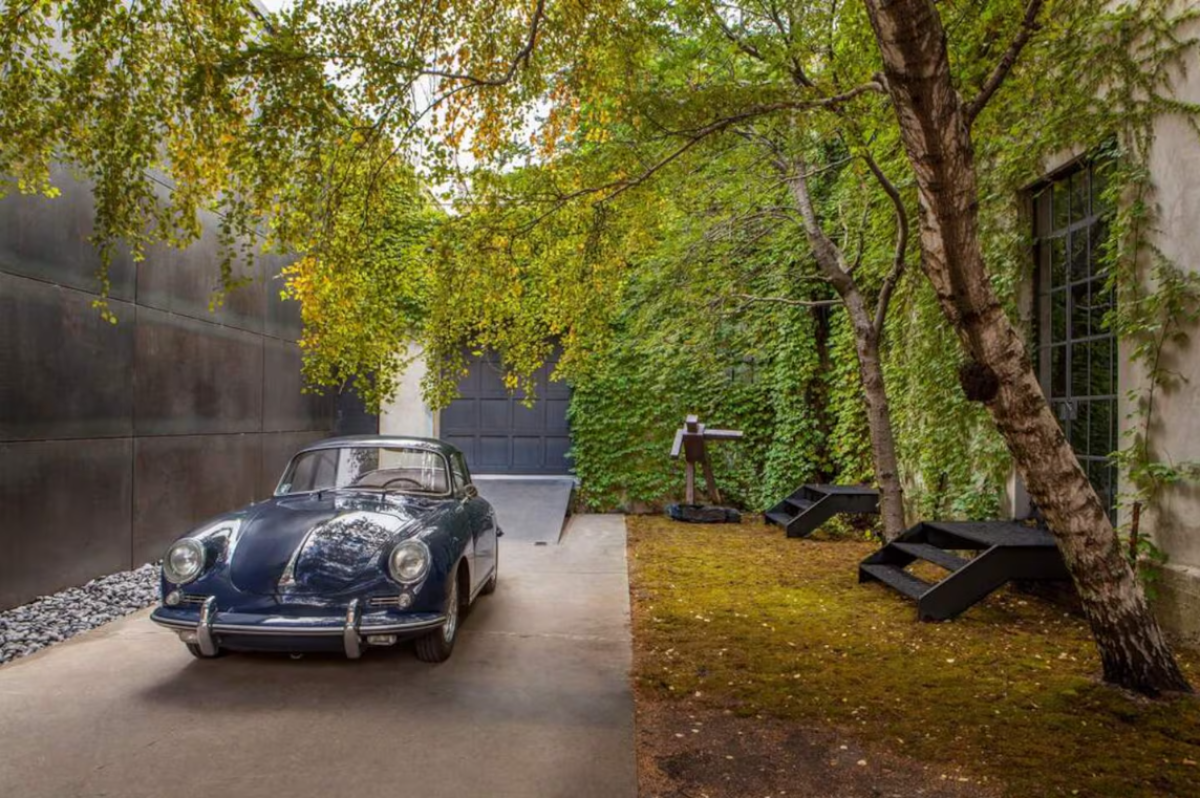
Built at the turn of the century, this former charcoal factory is hidden in plain sight behind ivy-cloaked walls off a quiet alley on Chicago’s North Side.
The owner, a dealer in architectural artifacts, won a coveted AIA Award for his innovative redesign of the two-story, 3,500-square-foot structure. The 19th-century character has been retained: the original clay tile and concrete walls, factory windows, and beautiful timber floors and ceilings. Muted colors, textures and rich fabrics create a sense of retreat, while unique furnishings, artworks, and artefacts sourced from around the globe add an aura of mystique.
The entrance is a big, motorized roll-up garage door opening to a picturesque courtyard. The interiors are configured with one large bedroom and two bathrooms (but there’s room for three more bedrooms), a living room with a monumental log-burning fireplace, and an atmospheric gallery space flowing out to a courtyard for outdoor living and entertaining.
Among the contemporary additions are radiant heated floors, a commercial sound system, and a sleek chef’s kitchen under a soaring timber ceiling and a casement window to welcome in the morning light.
There’s a separate two-car garage and additional parking in the courtyard. A 7,000-square-foot parcel adjacent to the property is also available for sale.
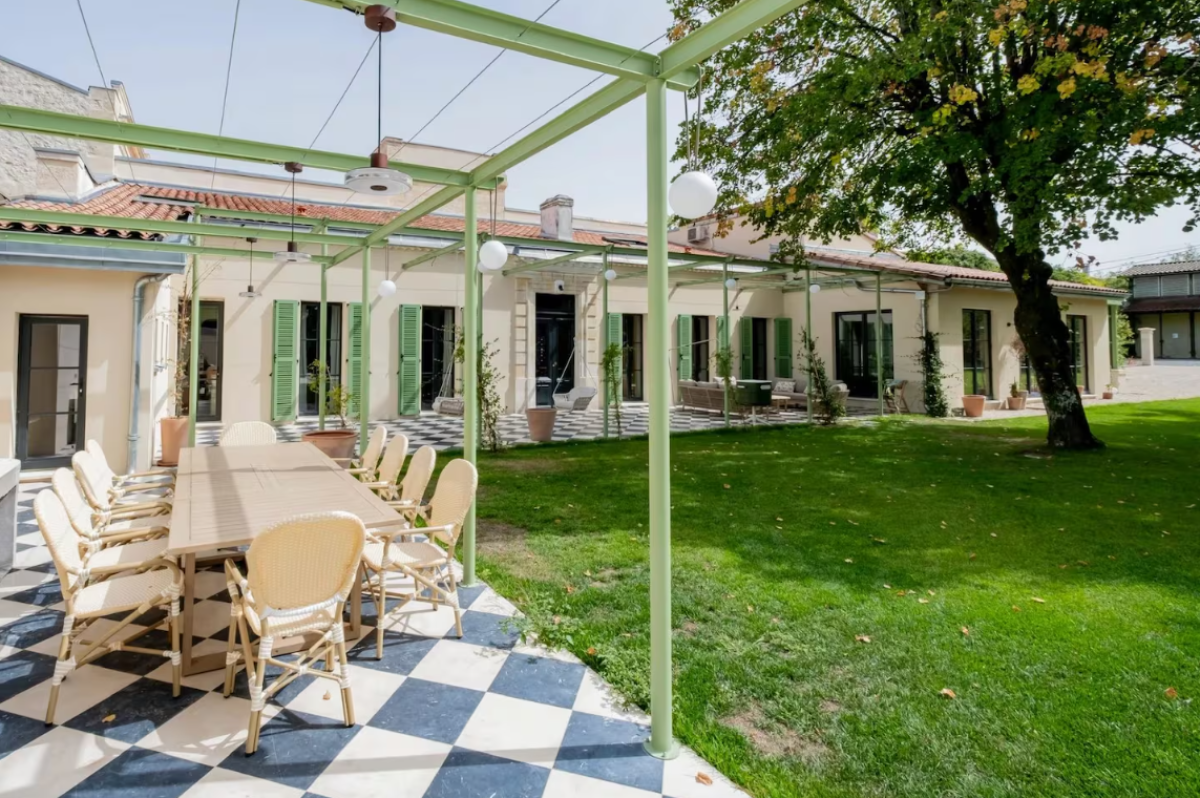
A longère is a long, rectangular, multifunctional agricultural building typical of northwestern France. This one, in Mérignac, near the city of Bordeaux, is a fine example. What makes the property unique though isn’t just its location, but the ambition to preserve its history and character.
Set on approximately 1,500 square meters (.37 acres) on the edge of the village of Saint-Augustin, the property features idyllic gardens with a swimming pool, a summer kitchen, and century-old trees.
The single-level residence opens onto a magnificent entrance hall, setting a warm and welcoming tone. The living room, enhanced by a fireplace and a library, offers an elegant space for relaxation. The monochrome palette modulates from cool gray to warmer hues of cream and tan. The high-end, eat-in kitchen is fully equipped as the heart of the home, while the winter garden and the dining room lie beneath a stunning wrought-iron glass roof that floods the interiors with natural light.
The private quarters are a sanctuary of luxury, with an en suite primary bedroom and two guest bedrooms sharing a full bathroom. An office, powder room, and laundry room add functionality to the space, so too does the converted attic—transformed into a games room and cinema lounge.
The ancillary structures offer scope for development, with planning permission approved for use as a garage, gym, workshop, or studio apartment.
© Copyright 2026 Unique Estates. All rights reserved.