
Christie’s Private Sales: The Picture of Confidentiality


Some art buyers require discretion and care, and the Private Sales team at Christie’s is on hand to assist collectors away from the gaze of the saleroom
Christie’s may be best known for the drama of the saleroom, but a quieter and equally powerful side of its business unfolds behind closed doors. As Global Head of Private Sales, Adrien Meyer leads a part of Christie’s business that transacted $1.5 billion across 40 collecting categories in 2025—frequently placing the year’s most valuable works without a single paddle raised. Here, he explains how the team sources off-market masterpieces, why buyers pay a premium for exclusivity, and what private sales reveal that the auction room cannot.
For those unfamiliar with Christie’s Private Sales, how does the team operate within the traditional auction house?
Privates Sales is a matchmaking service. We source specific objects to fulfill wishes through our network of 500 specialists. We transact privately across 40 collecting categories from fine art to jewelry, decorative arts, watches, handbags, and even cars. It is discreet and swift: 82 percent of the works we offer change hands within 50 days. Buyers are willing to pay a premium for this exclusivity.
Private Sales is an established part of our business, it’s “always on,” and it’s not new. Our founder James Christie regularly negotiated private sales, most notably the sale in the 18th century of the exceptional art collection amassed by Great Britain’s first prime minister, Sir Robert Walpole, to Catherine the Great of Russia, which forms the core of the Hermitage collection in St. Petersburg.
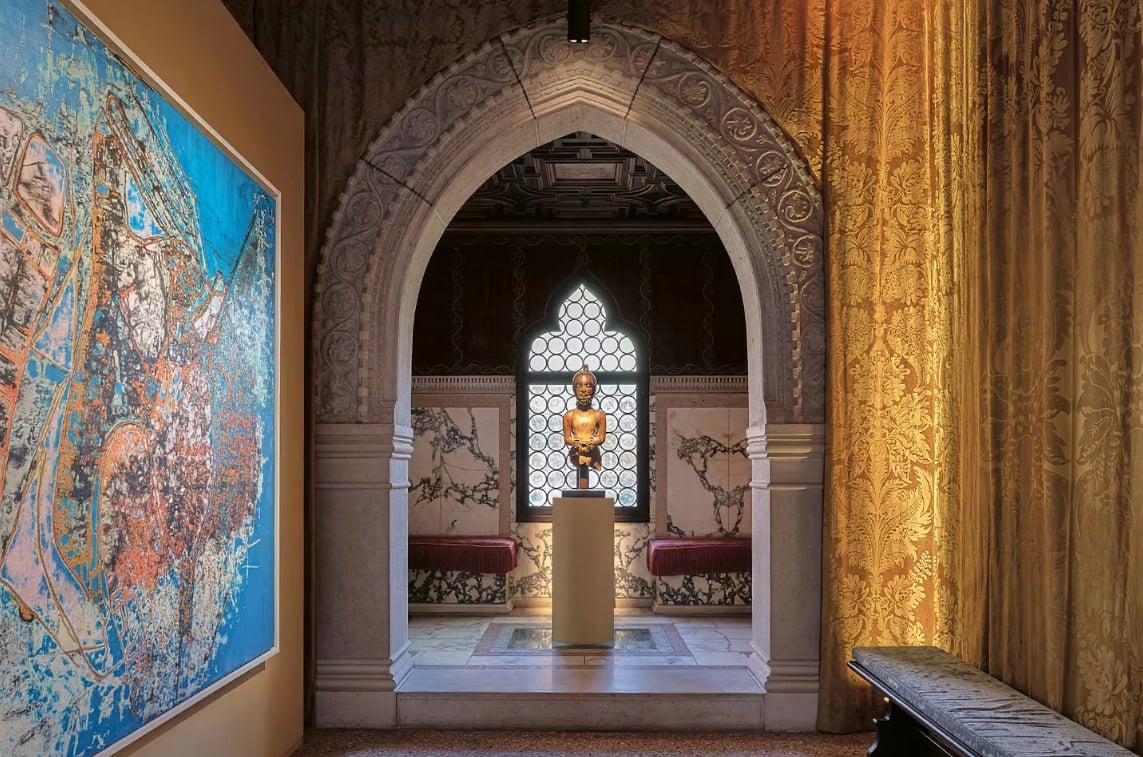
We also hold regular “selling” exhibitions to promote this discreet part of our business. At this year’s Venice Biennale we held an invitation-only exhibition, Ghost Pavilion, in Ca’ Dario, a magnificent Grand Canal palazzo that is allegedly haunted. To capture the spirit of the property, works included “vanitas” by Andy Warhol and Carracci, alongside views of Venice by Turner and Manet, and a portrait of Laura Dianti by Titian. Contemporary artists included Maurizio Cattelan and Mark Bradford, who represented the United States at the 2017 Venice Biennale. Works were valued from $500,000 to $50 million-plus, and the exhibition drew more than 2,700 visitors and led to many sales.
How is the Private Sales team comprised, and how do the experts connect with the wider Christie’s team?
The teams work hand in hand as the clients are the same. There are Private Sale Heads in each major collecting category who lead this important part of the business to ensure we cater to our clients. The same level of expertise, client care, and due diligence is applied.
Can you walk us through how a purchase with Private Sales works?
Let’s say you are looking for an engagement ring, a specific diamond cut within a price range. One of our specialists would come back to you with a selection of rings available, then undertake the negotiation to get the best price and ensure it is delivered in time. Should you be looking for a particular kind of painting, we would identify those in private hands and engage with the owners, who may not have been looking to sell.
Where do private sale items come from, and how do you secure them?
Our main advantage is our global network of specialists and their knowledge of the object’s location. A client may wish to sell something discreetly and at a set price. We will know who the most likely buyer is, informed by our auction experience, and make the approach to broker the sale. Private Sales can also be a step ahead of auction, in case a sale could be brokered ahead. This is especially helpful should a client need a quick sale.
What motivates a client to sell or buy via Private Sales rather than through the auction room? We would love to understand the benefits for both the seller and the buyer.
We always explore both options. Our specialists make recommendations based on the client’s needs and their knowledge of the market. In some circumstances, the wish for discretion or the certainty of an aspirational price will prevail. In other instances, sellers will welcome the competitiveness of the open market. There are merits on both sides.
Where are your most active markets and collectors?
More than half of our buyers are American. Consignors are more evenly spread between Europe and the United States, and increasingly from Asia. Private Sales had a strong year in 2025, totaling $1.5 billion, which represented a 24 percent contribution to global sales. It’s a growing area of our business with around half of our buyers new to this channel.
Without the theatre of an auction, how do you arrive at an item’s pricing and build client confidence in its value?
It is our job to explain the merits of a buying opportunity and clients are quick to see the value in being the only one considering it. The consignor has control over the final price, which provides a certain peace of mind. A work sold privately also protects the freshness of the item, which in some cases has a significant added value that buyers are willing to pay a premium for.
Are you seeing any categories or price levels where private sales are becoming the dominant model?
Amazingly, the top works in value sold at Christie’s last year, and in recent years, were sold privately. This applies to both modern and classic art. While private sales are getting increasing traction from our most important clients, I can also attest as an auctioneer that nothing replaces the potential for surprises in a live auction. That’s where the magic happens.
How do you help clients shape a collection?
By taking time. It is key to learn about the category you are interested in first, then buy with your eyes, not your ears. Our specialists are always on hand to recommend works which might fit a client’s taste.
Do private sales reveal anything about specific markets that auctions can’t?
Private sales are, by their very nature, discreet and that is important to some of our clients. For us at Christie’s, each informs the other and they work in harmony together.
Which categories are currently strongest in private transactions?
The highest-value transactions tend to be in our 20th- and 21st-century art categories, but also just as significantly in Old Masters and jewelry.
Can you share any standout private sales that capture the uniqueness of your work?
We are proud of the museum acquisitions brokered by the Private Sales team in 2025: the National Gallery’s Ballet Dancers by Edgar Degas and, in a separate transaction, a portrait of King David (1651) by Guercino. And there was a marble relief by John Deare, a Neoclassical sculptor working at the end of the 18th century, for the V&A, and five important medieval manuscripts from the collection at Longleat House, acquired by the British Library.
Can you mention any recent works sold—or currently available—that would surprise even seasoned collectors?
Some might be surprised to find online the presence of meteorites and fossils side by side with a first edition of Sir Isaac Newton’s Principia from 1687. The offer is rich and our specialists’ guidance and advice is available to everyone. Come along to Christie’s in person or online—there’s so much to discover.
Source: Christie's
Read more from category Lifestyle

Club Class: The Planet’s Greatest Golf Courses
 23/09/2026
 Lifestyle
 Unique Estates
Beyond the Pitch: 4 Distinctive Residences in Spain and Argentina
20/07/2026LifestyleUnique Estates
Unique Estates Life – Media Partner of BMW Ladies’ Spring Drive
30/04/2026LifestyleLora Petrova
Portugal for the senses: detox and wellness experiences
27/04/2026LifestyleSylvana VassilevaYou can find a gated community at the seaside on the websites of real estate agencies. Unique Estates offers luxury gated communities at the seaside. Explore our collection of gated communities and find the perfect one that suits your preferences.
 Call us