




Club Class: The Planet’s Greatest Golf Courses


Golf enthusiasts can choose from countless courses to test their game, but narrowing down the best options around the world makes for an exciting bucket list of adventure
Say you could construct the greatest golf itinerary imaginable—where would you start? With so many variations of play available, there’s a feast of options waiting to be added to the ultimate golfer’s bucket list.
You might prefer the challenge of links golf, where wind, firm turf, and pot bunkers have been an essential part of the game since its origins—but that doesn’t mean you’d turn your nose up at a serene stroll through a tree-lined parkland course. Or you might choose guaranteed sunshine over the potential for clouds and rain, in which case desert golf might be your preference. There are no wrong decisions, just an endless array of unique challenges.
Here, we take a walk off the beaten track, avoiding the obvious big names such as Augusta National in Georgia and Pebble Beach in California, to find some of the best courses around the globe. Then it’s just a case of planning the trip of a lifetime, and starting to tick them off, one tee at a time.
Parkland courses
When the game went inland from the coast, it evolved. The ball began to fly higher through the air, which meant course designers needed to present different challenges. Avoiding trees became part of strategy, play got faster, and greens began to become more interesting and complex. The best parkland courses feel like a stroll through the forest, without the distraction of houses or man-made noises. Instead of forced carries and deep bunkers, thick rough typically serves as the courses’ best defense. The world’s most famous parkland course, Augusta National, has had a tremendous influence on how others have been built and maintained, sometimes to the game’s detriment but also inspiring innovation.
Merion (East), Philadelphia, Pennsylvania, U.S.A.
A masterpiece of strategic design known for its wicker-basket pins in place of the usual flags, plus its devilish bunkering, Merion boasts a championship pedigree that has spanned a century.
Stadium courses
Test yourself in a championship environment and imagine what it would feel like to hear a gallery roar after sticking it close. That’s where stadium courses come in. They are big and brawny and might leave you exhausted once the round is over, but when you watch the pros play them on TV, there’s a sense of satisfaction that’s unmatched elsewhere.
Desert courses
The game was not meant to be played in the desert, but excellent golf has emerged in such places over the past 75 years. You won’t see many people walking and carrying a bag on courses where the temperature skyrockets after 10 a.m., so carts are part of the experience in desert golf. But so is sunshine and firm turf. Accuracy is paramount since no one wants to venture among the cacti and the snakes to find an errant drive, but the conditioning is usually excellent since the maintenance crew can focus the limited water supply on the greens and fairways.
Sandbelt courses
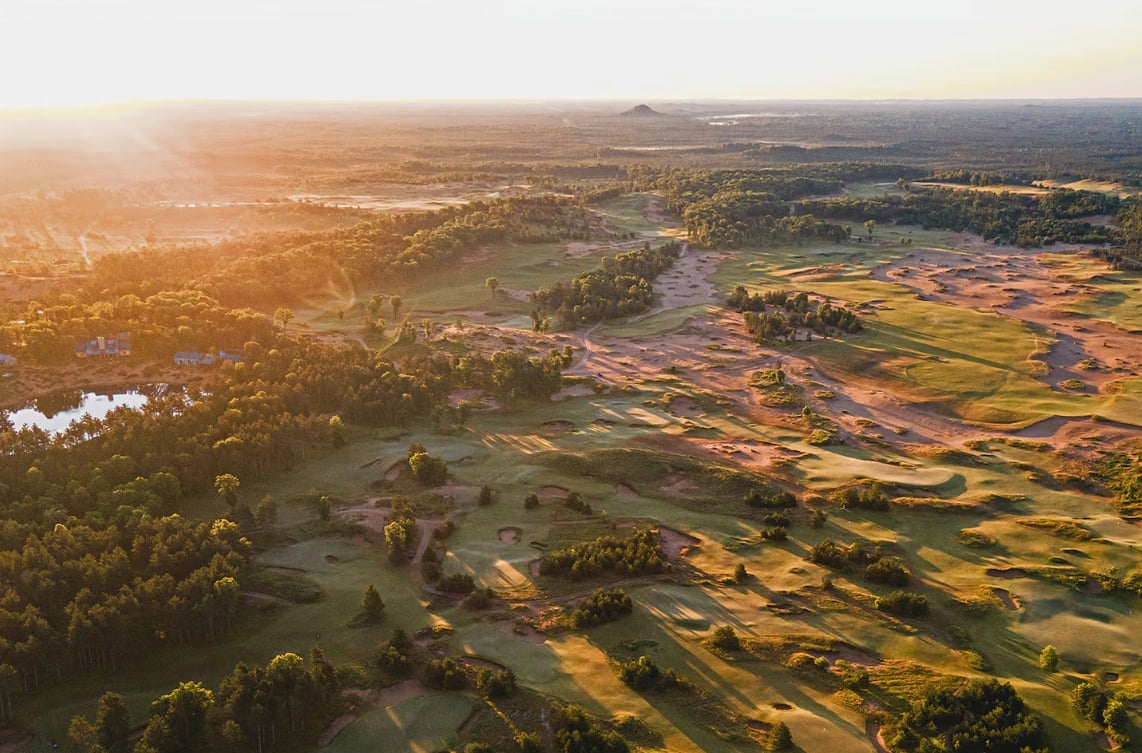
Sand is the secret ingredient when it comes to building a great golf course. Not only is it easy to grow a variety of grasses on sandy soil, it will also dependably drain and the ground will remain firm even after a deluge of rain. The Sandbelt refers to the area around Melbourne, Australia, where the land was once covered by the ocean, but in recent years, designers have discovered similar conditions in Nebraska. A sandbelt course stands out because of its unique bunkering, which is sometimes cut right up to the edge of the green. Blind shots and the ability to judge how much the ball will roll out once it lands are a big part of the challenge.
Heathland courses
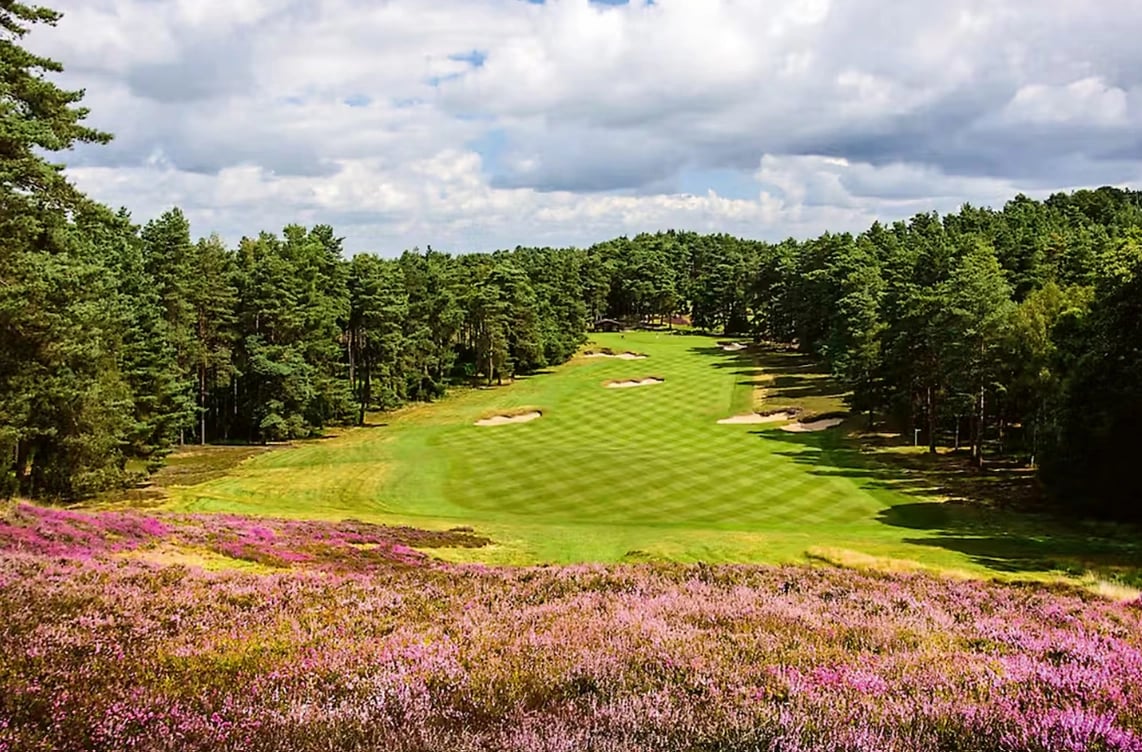
Heathland golf is characterized by its firm, sandy turf and its use of vegetation as a hazard, particularly heather and gorse. You can play the ball through the air, but also utilize the ground, which makes it great for match play and a contrast of styles. Heathland courses are often viewed as providing a social experience, and 36-hole days are broken up by lunch and drinks.
Par 3 courses
Hitting a driver off the tee and a long iron into the green is among the game’s most satisfying challenges, but not every round of golf needs to be a stress test. Some days, you just want to hit wedges and have a pleasant conversation, maybe with a drink in your hand. That’s where the recent growth of par 3 courses comes in—36 holes a day might feel like too much once you reach a certain age, but 18 might not feel like quite enough. If you’re staying and playing at a destination resort, a par 3 course is an excellent bet.
Links courses
To channel the original ethos of the game, playing the ball along the firm ground, then a seaside links course is the right fit. Scotland, England, and Ireland are home to most of the best links courses, but there are a few places around the world (New Zealand and Oregon) that measure up to the game’s finest. You won’t find many trees on links courses, just sandy turf and imposing dunes that give the land its character. The Open Championship, the game’s oldest major tournament, is contested on a links course every summer. There are plenty of opportunities to play those championship venues, but some of the best links courses in the world can’t host the Open because they lack the length necessary for the modern game, or the space to build infrastructure like grandstands.
Source: Christie's International Real Estate
Read more from category Lifestyle

Christie’s Private Sales: The Picture of Confidentiality
 22/09/2026
 Lifestyle
 Unique Estates
Beyond the Pitch: 4 Distinctive Residences in Spain and Argentina
20/07/2026LifestyleUnique Estates
Unique Estates Life – Media Partner of BMW Ladies’ Spring Drive
30/04/2026LifestyleLora Petrova
Portugal for the senses: detox and wellness experiences
27/04/2026LifestyleSylvana VassilevaYou can find a gated community at the seaside on the websites of real estate agencies. Unique Estates offers luxury gated communities at the seaside. Explore our collection of gated communities and find the perfect one that suits your preferences.
 Call us